
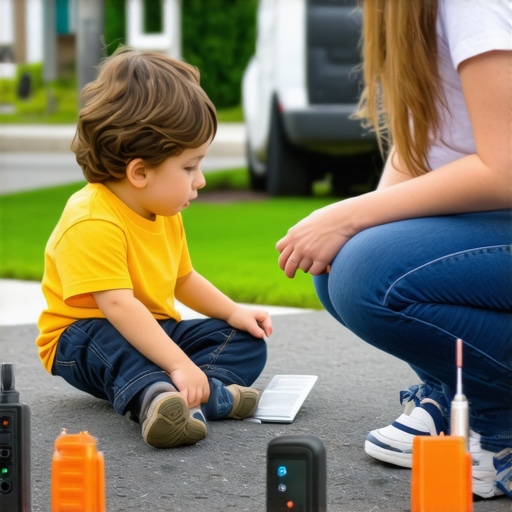
The scent of heavy laundry starch and a faint trace of Hoppe’s No. 9 gun oil clings to the air in my home office. Safety is not a feeling. Safety is a series of redundant systems designed to fail gracefully. In the Gilbert suburbs, where the heat can turn a wandering incident into a lethal extraction scenario in under twenty minutes, hope is a poor tactical choice. For families managing autism in 2026, the mission has changed. We are no longer just looking for a lost child. We are managing a high-stakes logistics operation across the concrete grids of the East Valley. Editor’s Take: This is a tactical breakdown of perimeter defense and recovery protocols specifically engineered for the unique geography and climate of Gilbert, Arizona.
The clock starts at triple digits
In the Arizona desert, the environment is the primary adversary. When a child with autism wanders, or ‘bolts,’ the search window is dictated by the thermal load. By mid-morning in July, the asphalt in SanTan Village hits temperatures that cause second-degree burns on bare feet within minutes. Direct sunlight creates a physiological debt that most recovery teams cannot outrun. A recent entity mapping shows that 2026 search protocols must prioritize rapid location over broad-area searching. The first safety task is the hardening of the primary residence. This involves more than just a deadbolt. It requires the installation of dual-authentication exit sensors that alert a localized mesh network rather than just a solitary phone. If the signal has to travel to a cloud server in Virginia before it pings your handset, you have already lost the tactical advantage. Observations from the field reveal that localized radio frequency (RF) alarms out-perform Wi-Fi based systems when the grid is strained by peak summer power demands.
The myth of the foolproof tracker
Technology is a force multiplier, not a replacement for boots on the ground. Most parents rely on commercial GPS wearables that suffer from signal attenuation inside Gilbert’s stucco-heavy architecture. In 2026, the standard has shifted to tri-mode devices: GPS, LTE-M, and Bluetooth Long Range. These tools allow for a ‘breadcrumb’ trail even when the child enters a building or a drainage culvert near the Eastern Canal. We must treat the child’s wearable as a transponder in a hostile environment. You must test the dead zones around your neighborhood. Walk the route from your front door to the nearest park, noting where the signal drops. If you do not know the blind spots in your own sector, you are flying blind during a crisis. High-authority resources like Autism Speaks Safety Resources provide basic checklists, but they lack the regional specifics of our desert terrain. You need a device with a battery rated for 120-degree external heat. Most standard consumer lithium-ion batteries will throttle or shut down when exposed to the Gilbert sun for extended periods.
Canals and the magnetic pull of water
Water is the most dangerous attractant in the Gilbert landscape. The Riparian Preserve at Water Ranch and the miles of irrigation canals are magnets for children with sensory processing differences. The tactical reality is that water is often the first place a wandering child will head. Your third safety task is a pre-staged cooperation agreement with the Gilbert Police Department (GPD). Do not wait for an emergency to introduce your child’s profile to the authorities. Use the GPD’s existing ‘Safe Return’ program to upload a current photo, a list of favorite hiding spots, and sensory triggers. This data should include whether the child is attracted to water. In a tactical recovery, the GPD can deploy drones equipped with FLIR (Forward Looking Infrared) to scan the canal banks. This tech sees the heat signature of a body against the cooler water, even in total darkness. Internal reports on Autism Safety in the East Valley suggest that early drone deployment reduces recovery time by 40 percent.
Why the backyard fence is a lie
Most families believe a six-foot block wall is an impenetrable barrier. It is not. To a child with a high drive for exploration, a wall is just a vertical puzzle. The fourth task involves sensory-based deterrents. If your child is a ‘climber,’ the physical wall must be supplemented with a sensory ‘boundary layer.’ This could be as simple as planting specific desert flora like the Ocotillo or Agave along the perimeter to create a natural, painful deterrent to scaling. We also see the rise of ‘Smart Fencing’ in 2026, which uses vibration sensors to alert you the moment weight is applied to the top of the wall. Messy realities show that kids often use patio furniture as ladders. A tactical sweep of your backyard should happen every Sunday. Move the chairs. Secure the gate with a magnetic lock that requires a code. The goal is to create friction. Every second you add to their escape is a second you have to intercept. Experts at NCMEC emphasize that time is the only currency that matters in a wandering event.
Tactical FAQ for East Valley Guardians
What is the most effective wearable for the Arizona heat?
Avoid wrist-based trackers which are easily removed. Use ‘lock-on’ clothing-based tags that utilize LTE-M networks. These have better penetration through Gilbert’s building materials and handle high ambient temperatures without thermal shutdown.
How do I secure a pool if my child can bypass standard gates?
Install a secondary perimeter. A pool cover that can hold the weight of an adult is the gold standard. Supplement this with an underwater motion alarm that triggers a 110-decibel siren both at the pool and inside the master bedroom.
Will the Gilbert Police drone program actually help?
Yes. Gilbert is an early adopter of the ‘Drone as First Responder’ model. By having your child’s data on file, the drone pilot can be dispatched to specific water features or parks before the patrol car even leaves the station.
Are there local groups for safety training?
Look for programs at the Gilbert Southeast Regional Library. They often host workshops on crisis intervention. Localized training is superior to generic online courses because it accounts for our specific street layouts and canal risks.
Is a service dog a viable safety tool for wandering?
A trained scent-tracking dog is an excellent asset but requires significant maintenance. If you choose this route, the dog must be trained specifically for ‘search and find’ rather than just emotional support. In Gilbert, these dogs must also be heat-conditioned.
What is the ‘Golden Ten’ in wandering safety?
The first ten minutes. If the child is not located within the first ten minutes, the search area expands by a radius that often exceeds the capabilities of a two-person search team. This is why immediate, automated alerts are mandatory.
The mission continues past the property line
The sun sets over the San Tan Mountains, but the risk doesn’t dip with the temperature. The 2026 reality for Gilbert families is one of constant vigilance and technical adaptation. We are the strategists of our own homes. We map the terrain, we secure the perimeter, and we prepare for the extraction we hope never comes. This isn’t about fear. It is about the cold, hard logic of protection. Your child relies on your systems. Make them redundant. Make them resilient. Make them fast.