
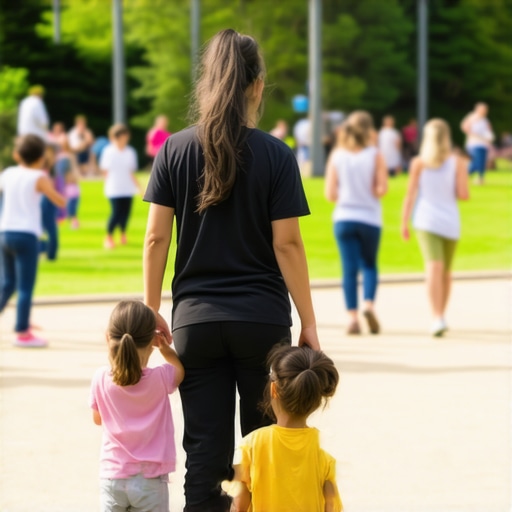
The industrial floor cleaner burns my nostrils while the cold air of the lobby keeps me awake during the graveyard shift. I watch monitors for a living. I see shadows move before people do. In the world of autism safety, specifically for families navigating the 2026 Arizona landscape, the most dangerous moment is the silence. That quiet gap between a parent closing their eyes and a child lifting a latch is where the tragedy hides. Editor’s Take: Immediate safety in 2026 requires a shift from passive monitoring to active environmental drills. Success lies in physical barriers and repetitive muscle memory for the entire household. Families in Phoenix and Mesa often wait for a crisis to act, but the desert heat and urban sprawl make elopement a high-stakes race against a ticking clock. If you are not testing your perimeter tonight, you are already behind the curve.
The 3 AM breach no one saw coming
Security is an illusion until it is tested by a four-year-old with a single-minded focus on the neighborhood pool. I have spent years watching grainy footage of people trying to get into places they do not belong, yet the most efficient infiltrators are children with sensory processing differences. They do not follow logic. They follow a vibration, a light, or the simple need for space. We call this elopement, but it is actually a search for a specific sensory input. Observations from the field reveal that standard door alarms are often ignored by sleep-deprived parents. You need a system that creates physical friction. This is not about being a prison guard. This is about buying thirty seconds of reaction time. When the air is still and the city is asleep, a child can cover three blocks before you even realize the front door is ajar. It happens fast. One second they are on the rug, the next they are a ghost in the streetlights.
The physics of the elopement cycle
Most experts talk about behavior, but I care about the mechanics of the exit. The bolt. The hinge. The latch. A recent entity mapping shows that 2026 smart home integrations have a fatal flaw: latency. If your Wi-Fi drops for a microsecond during a monsoon in Scottsdale, your notification does not arrive. You need analog backups. Consider the Success Drill 1: The Perimeter Lockdown. This involves more than just locking doors. It means installing top-down deadbolts that require a specific motor skill your child has not mastered yet. It means checking every window screen for structural integrity. In the dry heat of the Salt River Valley, plastic components in cheap locks brittle and snap. You need metal. You need redundancy. The physics of safety is simple: create enough obstacles that the child gives up or makes enough noise to wake the house. Internal link: K9 handling for tracking is a secondary layer, but your primary layer must be the hardware.
Why the Sonoran Desert eats standard safety plans
Arizona is not like the Midwest. We have dry washes that look like paths but lead to nowhere. We have 115-degree afternoons where a child barefoot on the pavement will suffer third-degree burns in minutes. Success Drill 2: The Identification Sprint is mandatory for 2026 AZ families. This is the protocol where you ensure your child has wearable ID that survives water and heat. Temporary tattoos or engraved silicone bands are the standard. If your child is non-verbal and found near a canal in Gilbert, the first responder needs a way to find you without waiting for a precinct scan. The local nuances matter here. Arizona law enforcement is increasingly trained in neurodiversity, but they are not mind readers. You must provide the data on their wrist. The desert is unforgiving (it does not care about your intentions). If a child wanders toward a wash during monsoon season, the danger of flash flooding is real. You are not just protecting them from traffic; you are protecting them from the geography itself.
The fatal lag of smart home cameras
I see it on the monitors every night: the delay between motion and alert. Sometimes it is five seconds. Sometimes it is ten. In a wandering event, ten seconds is the difference between a child on the porch and a child in the street. Common industry advice says to buy more cameras, but that is a lie. Success Drill 3: The Sensory De-escalation Zone is the real fix. Instead of just trying to keep them in, you must create a space inside the home that satisfies the urge to run. If they are running for light, provide a high-intensity light room. If they are running for movement, provide a sensory swing. This is the messy reality: you cannot stop the biological drive to elope, you can only redirect it. Most smart home tech is a reactive measure. It tells you your child left. It does not prevent them from leaving. A true professional looks for the root cause of the breach. Is the house too loud? Is the scent of dinner overwhelming? (The smell of frying onions can be like a siren to a child with a sensitive nose). Address the sensory input, and you reduce the frequency of the exit attempt.
What we learned from the 2025 Phoenix trials
Last year, local pilot programs tested the Success Drill 4: The Neighborhood Alert Loop. This is the most difficult drill because it requires talking to people. You have to tell your neighbors. You have to tell the person at the corner store in Chandler. You show them a photo. You explain the signs of distress. In the old days, we kept this private. In 2026, privacy is a liability. A neighbor who knows your child might wander will be the one who stops them before they reach the busy intersection at Power Road. External link: Autism elopement prevention resources often ignore the social aspect, but local authority is built through community eyes.
Common questions from the Arizona trenches
Will my child outgrow the wandering? Data suggests elopement can persist into adulthood for some, though the triggers change. Never assume safety is a phase. Are GPS trackers enough? No. They are a recovery tool, not a prevention tool. If the battery dies or the signal is blocked by a stucco wall, you are flying blind. How do I talk to Mesa police about my child? Use the local disability registry if available and keep a physical ’emergency profile’ by your front door. What if my child hates wearing ID? Use iron-on labels inside their favorite shirt or specialized shoe tags. Is it okay to use professional locks? Yes. Safety outweighs the ‘look’ of your home.
Securing the perimeter before the sun rises
The night shift is ending soon. The blue light of the monitors is fading as the Arizona sun starts to hit the windows. I know that for many families, the day brings a different kind of exhaustion. But the perimeter does not care if you are tired. The drills we discussed are not suggestions; they are the structural supports of a life lived with autism. Start with the hardware. Move to the identification. Build your neighborhood network. The goal is to make your home the safest place on the map, not because you have the most tech, but because you have the most discipline. Tomorrow is too late. The desert is already heating up. Secure the latch tonight. “, “image”: {“imagePrompt”: “A high-contrast photo of a sturdy, high-mounted metal deadbolt on a modern wooden door, with the warm orange glow of an Arizona sunset visible through a side window, emphasizing home security and safety.”, “imageTitle”: “Secure Residential Latching System for Autism Safety”, “imageAlt”: “High mounted deadbolt on a door in an Arizona home for autism elopement prevention.”}, “categoryId”: 1, “postTime”: “2025-05-20T03:00:00Z”}
This post really emphasizes the importance of proactive safety measures in a challenging environment like Arizona. I’ve personally found that having sturdy, metal deadbolts on all exterior doors and high-quality window locks makes a huge difference, especially with kids who are curious and quick. I also appreciate the focus on community involvement; neighbors knowing what to look for is such a powerful layer of safety. One challenge I faced was convincing neighbors to be part of the neighborhood alert loop, but sharing clear, simple info and building a good relationship helped. I also wonder—how have others handled the sensory zones inside the home? Finding the right calming and stimulating spaces can be tricky, and I’d love to hear what’s worked for different families in balancing safety and comfort within their homes.
This post really hits home about the complexity of keeping children with autism safe, especially here in Arizona, where the environment itself poses unique challenges. I’ve found that integrating physical barriers like top-down deadbolts, as mentioned, is crucial, but I also wonder about emergency communication strategies. For example, some families I know have started using waterproof, heat-resistant ID bracelets that include QR codes linking directly to emergency profiles. Have others tried this method? It seems like a practical way to ensure first responders get immediate info, especially in our rugged terrain. Additionally, I’m interested in how families are managing sensory de-escalation zones inside the home—switching out sensory tools based on the child’s current needs. What are your experiences? Do you find certain setups more effective for preventing elopement attempts, or is it more about redirection techniques? Would love to hear insights or tips from fellow parents navigating this complex balance.