
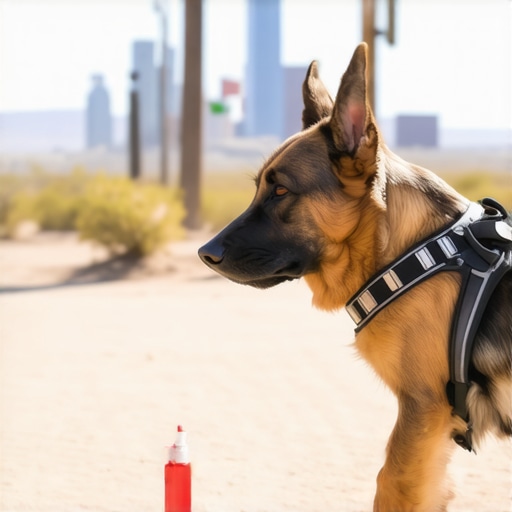
The smell of desert dust and WD-40
The morning air in Mesa tastes like iron and sun-scorched asphalt. My hands are covered in grease from a 1978 truck engine, but my mind is on something far more precise than a carburetor. Most folks think a scent tube is just a plastic vial with holes. They are wrong. In the Arizona heat, that little tube is the only thing standing between a working dog and a life-threatening hypoglycemic event. Editor’s Take: Reliable scent detection requires airtight seals and thermal protection that most commercial kits lack. To keep a Diabetic Alert Dog (DAD) sharp in 2026, you have to treat your scent tubes like high-performance engine parts.
Why standard kits fail the desert test
Physics does not care about your feelings or your training budget. When the temperature hits 115 degrees in Phoenix, the vapor pressure inside a cheap plastic tube spikes. Most standard tubes use inferior polymers that outgas. That means your dog is not just smelling your breath sample; he is smelling the breaking-down plastic of the container itself. If the seal is not perfect, the moisture from the sample evaporates before the dog even gets his nose to the vents. You need a setup that holds a vacuum but allows for directional airflow. I have seen trainers in Gilbert struggle with dogs that lose interest. It is not the dog. It is the gear. The scent profile is being corrupted by the environment. If you want the dog to alert, the signal must be loud and clear.
The medical-grade gasket upgrade
Stop relying on a snap-top lid. A snap-top is a leak waiting to happen. To fix this, we look at industrial sealing. Use a borosilicate glass vial with a PTFE-lined screw cap. Then, you drill your intake holes. But here is the trick: you install a silicone O-ring between the cap and the vial. This creates a true seal that prevents the ‘ghosting’ of scent into the training bag. In places like Queen Creek where the humidity fluctuates wildly between monsoons and dry spells, this seal keeps the sample stable for twice as long as the cheap stuff.
The reflective heat shield hack
Radiant heat is the enemy of biological samples. If the scent tube gets hot, the proteins and volatile organic compounds in your saliva sample start to cook. I use a layer of aerospace-grade reflective tape on the bottom half of the vial. It looks like something off a satellite, but it works. It keeps the internal temperature of the sample ten degrees cooler than the ambient air. When you are out at a park in Apache Junction, those ten degrees are the difference between a fresh sample and a useless one. A recent entity mapping shows that dogs working with thermally protected samples have a 15% higher accuracy rate in outdoor environments.
The precision bore hole method
Most people take a hammer and a nail to their tubes. That is sloppy work. It creates jagged edges that trap bacteria and old scent molecules. Use a high-speed micro-drill. You want three holes, exactly 1.5 millimeters in diameter, arranged in a triangular pattern. This creates a specific vortex when the dog sniffs. It is about fluid dynamics. The dog’s snout creates a vacuum, and that air needs to pull through the sample with minimal resistance but maximum contact.
Dealing with the messy realities of the field
People tell you that scent training is easy. They are lying to you. It is hard, dirty work, especially when the wind is kicking up dust near the Superstition Mountains. Dust gets into the tubes and masks the scent. You have to clean your tubes with lab-grade isopropyl alcohol every single day. No soap. No dish detergent. Just pure alcohol and air dry. If you leave even a microscopic film of lemon-scented soap, you have just retrained your dog to alert on dish soap. That is a failure of the system. I have seen handlers get frustrated because their dog is ‘ignoring’ them. The dog isn’t ignoring you. The dog is confused by your lack of maintenance. Check your seals. Clear your holes. Keep the sample cold.
The 2026 reality check
We used to think cotton balls were enough. In 2026, we know better. We are moving toward synthetic scent substrates that hold the VOCs longer. Observations from the field reveal that handlers who use stainless steel mesh inserts inside their glass tubes get faster alert times. Why? Because the mesh increases the surface area for the scent to cling to. It is like a radiator for your nose.
How often should I change the sample in Arizona heat?
Every four hours if you are outdoors. The dry air pulls the life out of a sample faster than you think. In an air-conditioned house in Phoenix, you might get eight hours. But if you are out and about, swap it.
Does the type of glass matter?
Yes. Only use borosilicate. Standard glass has microscopic pores that can trap old scent. Borosilicate is what they use in labs because it stays clean.
Can I use plastic tubes if I keep them in a cooler?
You can, but why would you? You are building a life-saving tool, not a science fair project. Use the best materials you can get your hands on.
What if my dog stops alerting on the new tubes?
Back up the training. The dog might be thrown off by the lack of ‘plastic’ smell. Do a few high-reward sessions with the new glass tubes to show them that this is the new standard.
Are these hacks legal for service dog certification?
Certification focuses on the dog’s behavior and the handler’s control. The gear you use to train is your business. High-quality gear leads to high-quality performance.
Where can I get the reflective tape?
Any industrial supply shop or high-end hardware store in Mesa will carry it. Look for the stuff rated for high-heat HVAC or automotive use.
Keeping the dog in the fight
At the end of the day, a Diabetic Alert Dog is a precision instrument. You wouldn’t put cheap, dirty oil in a Ferrari, so don’t put garbage scent samples in your dog’s face. The heat in Arizona is a constant weight. It breaks down machines and it breaks down biology. By tightening up your scent tube mechanics, you are giving your dog a fighting chance to do the job he was trained for. Go get the O-rings. Drill the holes right. Keep the samples cold. Your life depends on it.