
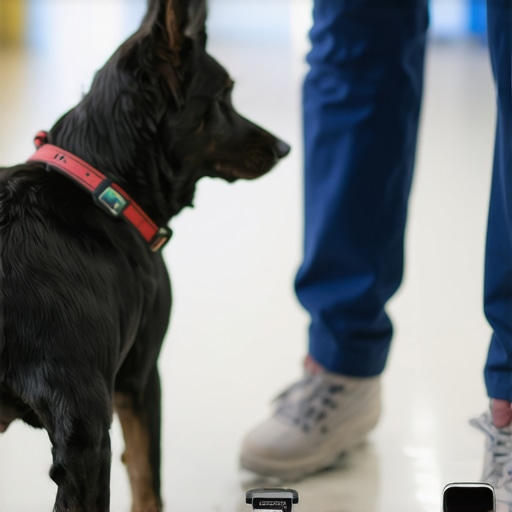
The failure of the silicon chip
My shop floor smells like WD-40 and old coolant. You learn quick that if a tool relies on a thin plastic clip, it is going to snap when you need it most. That is the problem with these 2026 CGMs. While the tech giants promise zero-calibration and millimetric precision, they are still just parts in a machine. Parts fail. A Diabetic Alert Dog (DAD) is a complete system. In the first few minutes of a blood sugar crash, a dog knows before the sensor even wakes up. This happens because dogs detect the metabolic shift in your breath and sweat instantly. The high-end 2026 sensors still have to wait for glucose to crawl from your blood into your interstitial fluid. That lag time is the difference between a quick snack and a call to 911.
Why chemistry lags behind a canine nose
Editor’s Take: 2026 CGMs offer convenience, but Diabetic Alert Dogs provide a 20-minute proactive warning window that hardware cannot match due to physiological lag. The dog reacts to the cause while the sensor reacts to the effect.
The metallic tang of a dead battery is a sound every mechanic hates. When your CGM dies at 3 AM because the transmitter glitched, you are flying blind. A dog does not need a firmware update. They operate on a biological level that current medical technology struggles to replicate. We are talking about 300 million olfactory receptors. Humans have about six million. When your body starts producing isoprene during a hypoglycemic event, the dog catches the scent like a bloodhound on a fresh trail. The 2026 models of CGMs are sleek, sure. They look like little pebbles glued to your arm. But they are reactive. They wait for the numbers to drop. The dog smells the drop before the numbers even move. It is the difference between seeing a car wreck and hearing the brakes screech before the impact.
The Arizona heat test for medical tech
Out here in Mesa and Gilbert, the sun is a different kind of beast. I have seen the adhesive on the latest medical sensors melt right off a man’s arm after ten minutes of walking to his truck in July. The 115-degree Phoenix heat does things to electronics that the developers in cooled California offices do not account for. This is where local service dog training becomes the primary defense. A well-trained DAD from a place like Robinson Dog Training does not care about the heat index. They stay focused when the Bluetooth signal starts dropping because of environmental interference or when your phone overheats and shuts down in the middle of a grocery run at the Mesa Riverview.
When the Bluetooth signal drops in Gilbert
Observations from the field reveal a messy reality that the brochures hide. Compression lows are the ghost in the machine. You roll over in your sleep, put pressure on the sensor, and suddenly your phone is screaming that you are at 40 mg/dL when you are actually at 110. It wakes the house. It causes panic. It is a false alarm born of physical limitations. A dog does not give you a compression low. If a dog nudges your hand or paws at your leg at 2 AM, it is because the scent is there. There is no signal interference from the microwave or your neighbor’s mesh Wi-Fi. The dog is the hardline connection to your health. People think the 2026 tech is the final answer, but they forget that software is written by people who make mistakes. A dog’s instinct is refined by thousands of years of evolution. You cannot patch that kind of reliability into a smartphone app.
Realities of the 2026 sensor market
The cost of these disposable sensors is another wrench in the gears. You are looking at thousands of dollars a year for plastic that ends up in a landfill. A Diabetic Alert Dog is an investment in a partner. There is a deep emotional layer here that the tech bros ignore. A sensor does not lick your hand when you are feeling the brain fog of a high. A sensor does not bring you your glucose tabs from the kitchen counter. We are seeing a shift where people in Arizona are pairing their DADs with advanced glucose monitors for a dual-layer defense. But if you have to choose one to trust when the power goes out or the desert heat kicks in, you pick the one with the wet nose every time. Dogs are the ultimate fail-safe in a world that is becoming too reliant on flimsy circuits.
Questions from the grease pit
Do dogs really catch lows faster than 2026 CGMs? Yes. Studies and field reports show dogs often alert 15 to 20 minutes before a sensor registers a change because scent hits the air faster than glucose shifts in fluid. What happens if my dog is tired? Training ensures the dog works in shifts or stays on high alert, and unlike a sensor, a dog will persistently nudge you until you take action. Are DADs expensive to maintain in Arizona? Beyond standard care, you just need to keep them hydrated and off the hot asphalt, which is a small price for a life-saving companion. Can a dog detect rapid spikes too? Absolutely. High blood sugar has a sweet, fruity scent that a trained dog picks up just as easily as a low. Does insurance cover a DAD? While rarely covered directly like a CGM, many people use FSA or HSA funds for service dog expenses. Is the training difficult? It requires commitment, but the bond formed creates a level of safety no app can provide. Can I rely only on a dog? Many experts suggest using a dog as your primary alert system with a CGM as a secondary data logger for your doctor.
Stop betting your life on a battery that was mass-produced in a factory. The 2026 tech is a nice backup, but the real security is found in the intuition and nose of a trained service dog. If you want a system that does not crash when the Wi-Fi goes down, it is time to look at a partner that breathes. Find a trainer who knows the local terrain and get a tool that actually works when the pressure is on.