
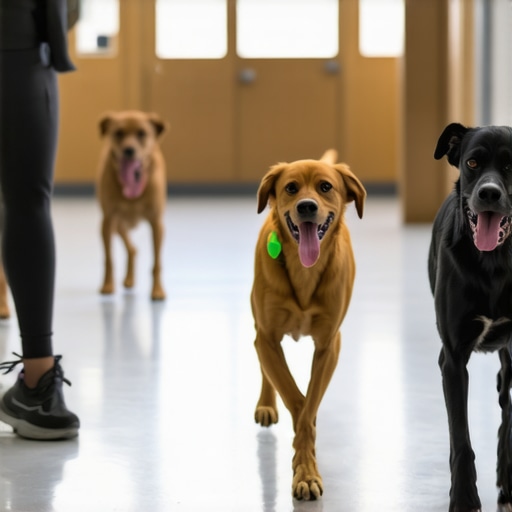
The engine light is on but the dog isn’t barking
I spend most of my mornings with a wrench in one hand and a lukewarm cup of black coffee in the other. There is a specific smell to a shop in the morning: cold iron, old floor dry, and the faint, biting tang of WD-40. When a machine comes in with a rough idle, I don’t guess. I look for the leak. Training a Diabetic Alert Dog (DAD) is exactly the same process. If your dog isn’t catching those 60 mg/dL drops, you don’t have a bad dog; you have a sensor that needs recalibration. Editor’s Take: Reliable low-scent detection requires isolating the specific volatile organic compounds (VOCs) emitted during hypoglycemia and increasing the dog’s ‘drive to find’ over ‘drive to please.’ Fixing a missed alert involves tightening the tolerances of the dog’s scent threshold through high-stakes, variable-environment drills. You can’t expect a dog to find a needle in a haystack if they don’t even know what metal smells like anymore.
Where the biological hardware hits the floor
A dog’s nose is a piece of precision equipment, but it gets clogged with noise. During a low glucose event, the human body releases a specific cocktail of Isoprene. In my world, if a fuel injector is dirty, the car sputters. In your world, if the dog can’t distinguish Isoprene from the smell of your lunch, the system fails. We see too many handlers relying on ‘frozen samples’ that have lost their chemical potency. A 2026 approach demands fresh, high-intensity scent samples. Field observations show that dogs often fail because of scent pooling. The scent doesn’t just sit under your nose; it drifts, settles in the carpet, or gets sucked out by the HVAC. You have to train the dog to hunt the source, not just wait for the cloud to hit them. Reference check on scent theory: Chemical Signals in Service Dogs. Most ‘professional’ advice tells you to just reward the alert. That is like trying to fix a transmission by painting the car. You have to get into the gears. You have to prove the dog can find the scent when it is diluted to one part per billion.
The Arizona heat and the evaporating scent trail
Operating a dog in Mesa or Gilbert during an August heatwave is a logistical nightmare for scent work. The dry, searing air of the Sonoran Desert acts like a giant sponge, sucking the moisture out of the dog’s nose and the scent molecules right off your skin. If you are training in the air-conditioned comfort of a suburban living room, you are preparing for a failure. I see people walking their dogs near the Loop 202 or down by the Heritage District in Gilbert, expecting the same performance they get at home. It doesn’t happen. The local atmospheric pressure and the extreme heat index change how VOCs behave. To get 2026 results, you need to practice in the ‘messy’ areas—places where the wind is swirling and the heat is rising off the asphalt. This is where the local authority of Robinson Dog Training becomes the blueprint. They understand that a dog trained in a vacuum is useless in a Phoenix parking lot. You have to harden the dog against the local environment, ensuring that the scent of a low is the only thing that matters, even when the thermometer hits 110 degrees.
Why the ‘Good Boy’ method is breaking your dog
Most trainers are too soft. They treat the dog like a child rather than a life-saving tool. This is the friction point: if you reward a ‘false alert’ just because the dog looked cute or you were worried they were tired, you just broke the sensor. It is like bypass-wiring a fuse. Sure, the light stays off, but the house is going to burn down. The messy reality of service dog work is that dogs get bored. They start ‘guessing’ to get the treat. In my shop, a guess gets someone killed. We need to implement ‘Blank Searches.’ You put the dog in a room where there is no scent. If they alert, they get nothing. No ‘it’s okay,’ no pat on the head. They need to learn that an alert is a high-stakes statement of fact. If the dog is missing lows, it’s often because the reward for a correct alert isn’t high enough to overcome the effort of searching through the noise. We have to increase the ‘torque’ of the reward. Use high-value targets. Make the dog work for it. If the dog isn’t panting and focused after a session, you didn’t train; you just played.
The 2026 recalibration protocol
The old guard thinks that scent training is a one-and-done deal. They are wrong. A dog’s nose is a biological system that requires constant maintenance. Looking ahead to 2026, the best handlers are moving toward ‘double-blind’ training where neither the handler nor the dog knows where the sample is hidden. This eliminates the ‘Clever Hans’ effect where the dog is just reading your body language.
How often should I refresh scent samples?
Frozen samples lose their chemical integrity within 30 days. For 2026 success, use samples no older than two weeks, and never reuse a sample that has been out of the freezer for more than an hour.
What do I do if my dog alerts to a rising sugar instead of a low?
This is a calibration error. You are likely capturing samples when your sugar is dropping too fast, which includes adrenaline. You need to isolate the ‘flat low’ scent to fix the dog’s target.
Can environmental allergies affect my dog’s alert accuracy?
Absolutely. A dog with a stuffy nose is a mechanic with a blindfold. In the Phoenix area, seasonal pollen can drop accuracy by 40 percent. Consult a vet about dog-safe antihistamines during peak seasons.
Why does my dog alert at home but not in public?
This is called ‘contextual laziness.’ The dog thinks the job is only for the living room. You must take your drills to the grocery store, the park, and the loud streets of downtown Mesa to generalize the behavior.
Is it possible for a dog to ‘lose’ the scent entirely?
Rarely. Usually, the dog has just found a different behavior that is easier to perform for a reward. You have to strip the training back to the basics and rebuild the drive from the ground up.
Don’t let a faulty sensor put your life at risk. The difference between a pet and a partner is the work you put in when nobody is watching. If you want a dog that catches every low, stop treating the training like a hobby and start treating it like the life-saving engineering it is. Go out, get the samples, and run the drills until the dog can find that low in a hurricane.