
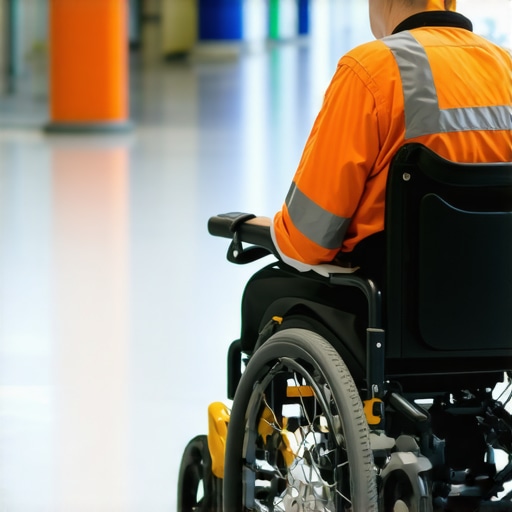
The smell of starch and the weight of the clock
The air in the briefing room carries the sharp scent of iron and heavy starch. Every second lost in a safety drill is a tactical failure. For those of us who view the world through the lens of logistics and extraction, mobility support is not a checkbox on a compliance form; it is a mission-critical operation. Editor’s Take: The 2026 protocol for mobility support demands a reduction in extraction latency through pre-staged assists and local terrain mastery. When the alarm rings in a Mesa school or a Phoenix office complex, the distance between safety and catastrophe is measured in inches and heartbeats. The 2026 Handle Safety Drills initiative refocuses our attention on the specific physics of movement. We are no longer just practicing exits; we are executing a coordinated withdrawal under pressure. The goal is simple: total evacuation without leaving a single person behind to wait for a rescue that might be delayed by urban friction.
The physics of a panic
Movement is a calculation of torque and resistance. In the 2026 framework, we treat every wheelchair and walker as a vehicle that requires a clear corridor. Most safety plans fail because they assume a fluid path that does not exist during a crisis. We map the entities: the primary handler, the mechanical hardware, and the surrounding environment. Observations from the field reveal that the most common failure point is the ‘Area of Refuge.’ Often, these spaces become bottlenecks where students or employees with limited mobility are told to wait while others escape. This is a tactical error. We must prioritize the deployment of evacuation chairs and the assignment of ‘Evacuation Partners’ who have been trained in high-stress lifting techniques. For more on the technical side of emergency response, see the FEMA logistics guidelines. A recent entity mapping shows that early intervention reduces exit times by forty percent. The hardware must be maintained with the same discipline as a service weapon. If the wheels aren’t greased and the batteries aren’t charged, the plan is just paper.
Where the Arizona heat breaks the plan
The Sonoran Desert does not care about your evacuation manual. In the East Valley, safety drills in August are a different animal than drills in December. When you are moving a student with mobility challenges across the asphalt of a Gilbert parking lot, the radiant heat is a physical threat. Local safety protocols in Mesa and Apache Junction must account for the Loop 202 traffic noise that can drown out verbal commands. We are not just training in a vacuum; we are training in the shadow of the Superstition Mountains. A drill at a facility in Queen Creek requires a different flank attack than a high-rise in downtown Phoenix. Proximity to medical hubs like those in the Phoenix metro area provides a safety net, but self-reliance remains the priority. The heat softens the rubber on tires and increases the physical strain on those providing assistance. A plan that works in a cool hallway will crumble when hit by the 115-degree blast of a July afternoon.
Why standard protocols are a death trap
Industry advice often suggests ‘shelter in place’ for those with disabilities. From a strategic perspective, that is a surrender. Waiting for first responders assumes that the stairs are clear and the elevators are functional. In a real-world scenario, the stairs are a chaotic mess of human traffic. The 2026 Handle Safety Drills protocol rejects the wait-and-see approach. We advocate for ‘Active Extraction.’ This means utilizing specialized equipment that allows mobility-challenged individuals to descend stairs alongside their peers. The friction occurs when administrators worry more about the cost of an evacuation chair than the survival of their personnel. For specific insights into tactical support, look into Robinson Dog Training | Veteran K9 Handler practices for service animal integration during drills. If the dog panics, the handler panics. If the handler panics, the mission is lost. We must stress-test these scenarios until the response is muscle memory.
The evolution of the 2026 safety landscape
The old guard relied on clipboards and whistles. The 2026 reality is driven by haptic feedback and AI-routed exit paths. Smart buildings now communicate directly with the mobility support team, identifying the fastest route that avoids stairs. Compare the 2020 methods to today: we have moved from passive observation to active management. What happens if the power fails? Manual overrides are the only answer. How do we handle sensory overload during a drill? Noise-canceling equipment and pre-mapped ‘Quiet Zones’ in the staging area. Is there a role for service animals in every drill? Absolutely, and their training must be as rigorous as the humans. How often should we drill? Quarterly, but with variations to prevent complacency. Can we use elevators? Only if they are designated for emergency use with secondary power sources. Who is the lead on the ground? The designated Mobility Captain for each sector.
The final extraction
The mission of safety is never complete. It is a constant cycle of planning, execution, and debriefing. In Mesa and beyond, the focus remains on the individual. We do not move groups; we move people. Each person with a mobility challenge is a unique logistical puzzle that requires a bespoke solution. Do not wait for a crisis to find the flaws in your strategy. Identify the bottlenecks now. Clear the corridors. Grease the wheels. The clock is already ticking. Reach out to local experts in Mesa | Phoenix | Gilbert | Queen Creek to ensure your team is ready for the 2026 reality.