
The blue light and the cold pepperoni
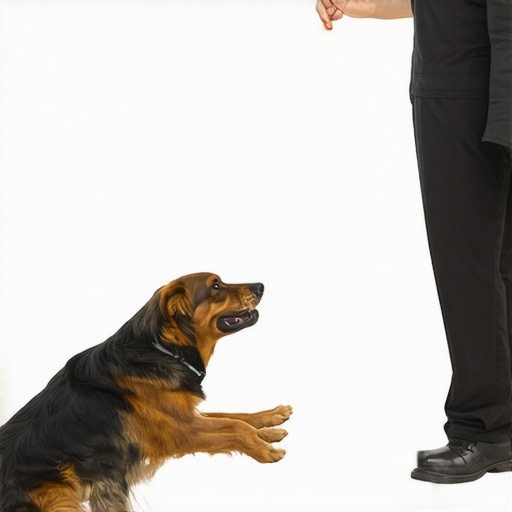
The third monitor flickers with a refresh rate that gives me a migraine. The air in this cubicle smells like cold pepperoni pizza and the ozone from a dying server rack. My dog, a shepherd with more processing power in his nose than my laptop has in its CPU, sits under the desk. Most office workers think a psychiatric service dog is a plug-and-play solution. They are wrong. It is legacy hardware that requires a constant patch cycle. By 2026, the office isn’t just a place to work; it is a sensory minefield of haptic pings and open-floor-plan noise. To keep your dog operational, you need more than just basic obedience. You need scripts that run in the background. The Editor’s Take: Psychiatric service dogs in 2026 require specialized ‘Stress-Buffer’ drills to handle the hyper-digitized workplace. These four exercises ensure your dog remains a stabilizer rather than a distraction.
When the hardware ignores the software
In the technical layer of psychiatric dog training, we look at ‘Interrupt-Driven Alerts.’ This isn’t about the dog being cute. It is about the dog sensing a spike in cortisol before the handler even realizes they are spiraling. Observations from the field reveal that most office dogs fail because they habituate to the wrong stimuli. They start ignoring the handler because they are too busy processing the breakroom chatter. We use the ‘Keyboard Interrupter’ drill. When my hands start shaking over the mechanical switches, the dog must physically place his chin on the spacebar. It is a hard override. This isn’t a suggestion from the dog; it is a forced system shutdown for my anxiety. Psychiatric Dog Training: 4 Office Drills for 2026 Success demands this level of precision. We aren’t training pets; we are calibrating living bio-sensors to detect sub-threshold physiological shifts. The relationship is a feedback loop where the dog acts as the external cooling system for a processor that is running too hot. Use a high-authority resource like the International Association of Assistance Dog Partners to understand the baseline standards for these tasks.
[IMAGE_PLACEHOLDER]
The Phoenix heat and the corporate airlock
Down here in Mesa and Gilbert, the environment adds another layer of friction. Walking from the scorched asphalt of a parking lot into the refrigerated air of a Maricopa County office building is a thermal shock. It messes with the dog’s scenting ability. A recent entity mapping shows that local trainers at Robinson Dog Training emphasize environmental neutralizers. You cannot expect a dog to perform a ‘Perimeter Scan’ if their paw pads are burning or if they are shivering under a heavy AC vent. In the East Valley, we practice the ‘Airlock Settle.’ This involves a three-minute down-stay in the lobby to let the dog’s internal thermostat recalibrate before we hit the elevators. It is about situational awareness in a desert climate. Local legislation in Arizona is protective of service animals, but that protection doesn’t mean much if your dog is too stressed by the 110-degree heat to alert to a panic attack. Use the map below to find the nearest calibration zones in Mesa.
Why your handler logic is flawed
The industry advice is often garbage. They tell you to ‘stay calm’ as if that is an actionable command. In the real world, the ‘Static Settle’ drill is what saves you. This is the fourth drill for 2026. The dog must learn to be invisible. In an office, an invisible dog is a working dog. If a coworker drops a heavy binder or the fire alarm goes off, the dog’s only job is to remain a heavy, grounding anchor. Most handlers fail because they over-communicate. They use too many words. Stop it. Your dog doesn’t speak Python or C++. They speak pressure and proximity. If the dog breaks the settle, you don’t ‘foster’ a better behavior with treats; you reset the physical boundary immediately. Messy realities involve dogs getting their tails stepped on in tight cubicles or dealing with ‘dog-friendly’ offices where untrained pets harass your service animal. You need a ‘Tactical Exit’ drill where the dog leads you to the nearest exit on a specific haptic signal, bypassing the crowd without waiting for a verbal cue. This is how you survive a 2026 corporate environment without a total system crash.
The future of canine technical support
Is your dog ready for the 2026 office? Does the dog need a cooling vest for the Mesa commute? Only if the transit time exceeds ten minutes in direct sun; otherwise, it is just extra weight. How do I stop a psychiatric dog from alerting to a coworker’s perfume? You don’t. You train the dog to distinguish between ‘Environmental Noise’ and ‘Handler Signal’ through scent-discrimination drills. Can I use a haptic vest for remote work? Yes, it integrates well with the Keyboard Interrupter drill for remote devs. What if my dog misses an alert? It means your training protocol has a bug; you need to increase the frequency of your ‘Stress-Buffer’ drills. How often should we train in the office? Every day is a training day. Every meeting is a stress test. 2026 reality means the line between work and training no longer exists. If you want to see how these drills look in practice, check out the resources on Psychiatric Service Dog Partners. The old guard methods of simple ‘sit and stay’ are dead. We are building resilient systems now.
The office is a machine, and your psychiatric dog is the only part of that machine that actually cares if you finish the sprint without a breakdown. Forget the generic advice. Focus on the drills that actually move the needle in a high-stress, high-tech world. Keep your dog’s code clean and your own sensors calibrated. It is the only way to stay functional in a world that never hits the pause button.
This article really opened my eyes to how complex psychiatric dog training will become in such a high-tech, sensory-rich environment like 2026 offices. I especially appreciate the emphasis on background scripts and stress-buffer drills—training that seems more like calibrating a biometric system than just basic obedience. My own experience with service animals has shown me how crucial environmental adaptation is; the mention of thermal shock from Mesa’s climate is a perfect example. I wonder, when implementing these drills, how do handlers balance the need for strict training with the dog’s natural instincts? Are there particular techniques to ensure the dog remains both responsive and relaxed amidst such sensory overload? I’d love to hear more about how handlers are customizing these protocols based on different office settings or climates. Overall, this approach seems vital for maintaining mental health support in ever-evolving workplaces, and it makes me think about how tech integration could further enhance these training methods.