
The perimeter of the mind at the gate
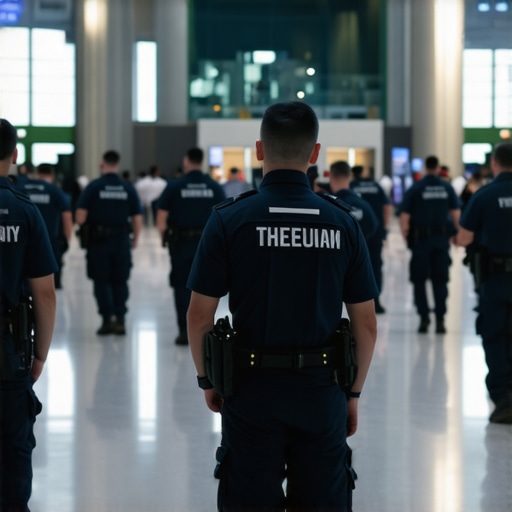
The air in the Mesa Gateway terminal smells of heavy starch and the faint, metallic tang of gun oil from a morning spent cleaning the gear. It is a sharp scent that cuts through the sterile, recycled oxygen of the airport. Most travelers see a sea of faces and rolling suitcases; I see a series of tactical vectors and potential choke points. For a veteran carrying the weight of past deployments, the 2026 airport is not just a transit hub. It is a high-stimulus environment designed to trigger the very alarms we spent years trying to quiet. Security is tighter, the biometrics are faster, and the crowds are more unpredictable than ever. Editor’s Take: You cannot wait for a panic attack to start before you fight back. You must secure your mental perimeter before you even step onto the asphalt of the departures drop-off. To block a PTSD spike in these modern terminals, you need a disciplined engagement of your sensory anchors and a refusal to let the environment dictate your internal state.
The mechanics of a sensory breach
Your brain is a radar system that has been calibrated for a different war. When the high-frequency hum of the 2026 biometric scanners hits your ears, your amygdala interprets it as a threat signature. This is not a failure of character; it is a biological misfire. Recent data from the National Center for PTSD shows that environmental stressors in high-density transit zones can increase cortisol production by 400 percent in less than three minutes. This is why the standard advice to just relax is useless. You are dealing with a hard-wired response. You need to redirect that energy. I call this the Vagus Nerve Override. By applying pressure to specific physical points or using temperature shocks—like a freezing bottle of water against the wrist—you force the brain to re-route its processing power from the perceived threat to a real, immediate physical sensation. If you want to dive deeper into the neurological pathways of trauma, the VA’s research on sensory integration provides a solid foundation for why these drills work when the world feels like it is closing in. You are essentially hacking your own internal comms to prevent a total system shutdown.
The Phoenix and Mesa thermal shift
Geography matters when you are managing a trigger. Take Phoenix Sky Harbor or the Mesa Gateway. You are dealing with a 110-degree heat signature on the tarmac that drops to a crisp 68 degrees inside the terminal. That thermal shock is a tactical advantage if you know how to use it. In the 2026 reality, airports in the Southwest have integrated more glass and open-air concourses. The glare from the Arizona sun can be a strobe-light trigger for some. I’ve patrolled these zones. I know the layout of Terminal 4 like a map of a familiar AO. When you feel the heat rising in your chest, find the nearest air conditioning vent. The physical sensation of cold air is a grounding signal. Local legislation in Arizona has actually increased the presence of service animal relief areas, which is a subtle nod to the growing number of us moving through these spaces with K9 support. If you are in the East Valley, you know that the pace here is different than JFK or LAX. Use that to your advantage. Slow your movement. Match the rhythm of the desert, not the rhythm of the frantic tourist who just realized they forgot their passport.
The lie of the deep breath
Most civilian experts will tell you to take a deep breath when you feel a spike. That is bad intel. When you are in the middle of a high-stress security pat-down, a deep breath can actually signal to your body that you are hyperventilating, which increases the panic. You need a combat-tested alternative. I use the Four-Count Box, but with a hard physical anchor. Squeeze your thumb and forefinger together until it hurts. That pain is a reality check. It tells your brain that you are in control of the sensation. The 2026 security queues are longer and the AI-driven facial recognition cameras are everywhere. They are watching for anomalies in behavior. If you look like you are about to boil over, you are going to get pulled aside for a secondary screening. That is the last thing you want. The goal is to move like a ghost. Be invisible. If you find yourself struggling with these moments, seeking a veteran K9 handler who understands the tactical nuances of space and pressure can be a life-saver. Professional support from experts like Robinson Dog Training can help you integrate a service dog that performs these drills for you. A well-trained dog can provide a physical barrier—a flank block—between you and the crowd, allowing you to focus on the mission of getting to your gate.
The biometric extraction drill
When you approach the biometric gate, do not look at the crowd. Look at the camera lens as if it is a target. This shift in perspective moves you from being the ‘prey’ in a crowded environment to being the ‘operator’ of your own movement. This is a subtle psychological flip. You are not being watched; you are participating in a system. Once you clear the gate, execute a ‘Tactical Reset.’ Find a wall, put your back to it, and scan the room for three exits. This simple act of situational awareness satisfies the primal need for a quick extraction route. It calms the lizard brain. I have seen guys blow their composure because they felt trapped in the center of a terminal. Never stand in the center. Own the perimeter. That is where the safety lives.
The evolution of the terminal war
In 2020, we worried about germs. In 2026, we worry about the digital footprint and the sensory overload of a hyper-connected world. The ‘Old Guard’ methods of just ‘toughing it out’ are obsolete. The modern world is too loud for that. You need a toolkit of tactical drills that match the complexity of the current terrain.
Is it possible to skip the biometric scanners?
In most 2026 hubs, opting out is a legal right, but it will result in a manual pat-down. If that is a trigger, the scan is actually the lesser of two evils.
How do I handle the noise of the terminal?
High-fidelity earplugs that filter out background hum while allowing for clear conversation are essential gear. Do not use total silence; use a filter.
What if I am traveling without my service dog?
You must become your own handler. Use a heavy backpack to provide the deep-pressure stimulation that a dog would normally provide.
Why does the evening flight feel harder?
Fatigue lowers your tactical defenses. If possible, book the first flight of the day when your cortisol levels are naturally more stable.
Are there designated quiet zones in Mesa Gateway?
Yes, the airport has integrated smaller, low-light alcoves near the far gates. Use them as a staging area.
Can I request a private screening?
Always. If you feel a breach is imminent, tell the TSA agent you are a veteran with a sensory condition and request a private room. It is your right under the current transport laws. You are the commander of your own mental space. Do not let a crowded terminal take that away from you. Secure your mind, execute the drills, and complete the transit. The mission doesn’t end until you’re safely behind your own door.