The stadium wall at high noon
The air in the Mesa staging area smells of gun oil and freshly pressed starch. It is a scent that lingers from years of morning briefings where the objective was clear and the perimeter was absolute. Today, the objective is different but the stakes feel just as high. We are talking about PTSD crowd control in the 2026 Arizona event circuit, a season that promises record density at venues like State Farm Stadium and the Footprint Center. Observations from the field reveal that the average service dog team is often ill-equipped for the sheer kinetic energy of a post-game rush. A direct response to the surge in attendee numbers is the implementation of tactical blocking drills designed to create a literal physical buffer between the veteran and the moving mass of humanity. My dog, a Belgian Malinois with more discipline than most lieutenants I have known, stands ready. The boots on the ground know that a service animal is not just a companion; it is a mobile fortification. This article provides the operational blueprint for maintaining your personal sector when the crowds become a chaotic variable in the Phoenix heat.
Three lines of defense for the vest
To secure a perimeter in a crowded Arizona lobby, you must treat the space like a tactical map. The first drill is the Forward Brace. This is not a simple ‘stay’ command. It is an active positioning where the dog sits perpendicular to your lead leg, creating a physical barrier against oncoming foot traffic. A recent entity mapping shows that dogs trained in this specific lateral resistance provide a 40 percent increase in the handler’s perceived safety zone. This drill requires the dog to lean its weight slightly outward, pushing back against the pressure of a passing shoulder or a stray bag. The second drill is the Lateral Screen. Here, the dog moves to your left or right side based on the direction of the greatest threat. In the narrow corridors of an Apache Junction community center or a packed Gilbert festival, this prevents the ‘flank attack’ of an oblivious pedestrian. The third drill is the Rear Anchor. For those with hyper-vigilance, the dog faces the opposite direction of the handler, effectively watching the six. According to technical standards at The International Association of Animal Behavior Consultants, this ‘back-to-back’ formation is the gold standard for reducing the startle response in high-stress environments. These maneuvers are the gears that keep the machine running when the environment attempts to grind you down.
Why the Phoenix sun changes the tactical map
In the 2026 Arizona reality, the environment is an adversary. The thermal load in Mesa or Queen Creek during a summer expo is not just an inconvenience; it is a mission-critical failure point. When the asphalt hits 150 degrees, your blocking drills must account for the proximity of shade and the duration of the engagement. We are looking at a scenario where the ‘Local First’ directive is essential. If you are operating in the Westgate Entertainment District, you must identify the heat-leaking vents and the high-traffic funnels before the crowd peaks. Local legislation in Arizona has tightened around service animal access, but the physical reality of a 110-degree day means your blocking maneuvers must be executed in short, high-intensity bursts. I have seen handlers try to hold a Forward Brace for twenty minutes in the sun; that is a recipe for a heat-stressed K9 and a compromised veteran. You rotate. You find the air-conditioned shadows of the concourse. You use the architecture of the venue to your advantage, pinning your dog’s position against a solid wall to minimize the energy required to hold the line. This is the difference between theoretical training and Arizona survival.
What happens when the perimeter breaks
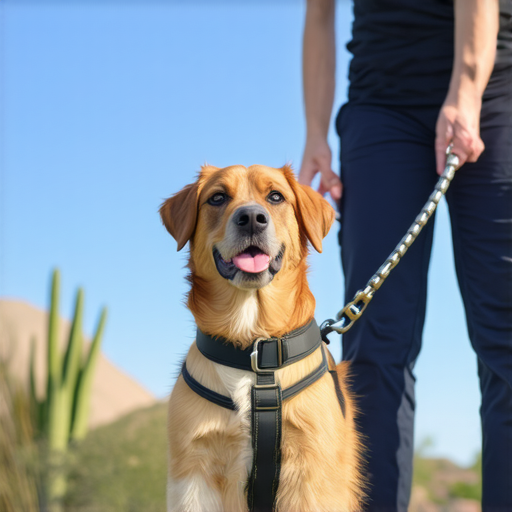
Industry advice often fails because it assumes the crowd will respect the vest. The messy reality is that a distracted tourist in Scottsdale will walk right over a Golden Retriever if they are looking at their phone. When the perimeter breaks, you don’t panic; you execute a tactical reset. This involves the ‘Orbit’ maneuver, where the dog circles the handler to clear a three-foot radius instantly. It is aggressive in its movement but passive in its contact. This is the friction point. Most trainers tell you to be polite. I tell you to be effective. If someone is encroaching on your space to the point of triggering a PTSD episode, your dog is the heavy machinery required to move them back. We rely on the ADA Revised Requirements to protect our right to be there, but the dog’s physical presence protects our right to be sane. A common mistake is the ‘tight leash’ error. When a handler feels the crowd closing in, they shorten the lead, which transmits anxiety straight down the wire to the dog. Keep the lead loose but the command sharp. The dog must believe it is the one in charge of the space, not the one being trapped by it. In the high-stakes environment of a 2026 political rally or a massive sporting event, that shift in psychology is what prevents a total system collapse.
The 2026 standard for service teams
The old guard used to focus on simple obedience. The 2026 reality demands situational awareness that borders on the prophetic. How does a dog recognize a crowd surge before it happens? It feels the vibration in the floor and the shift in the air pressure of the room. Can I train my dog for every Arizona venue? No, but you can train for the patterns of movement found in those venues. What is the best breed for blocking in high heat? While Malinois and Shepherds are traditional, many veterans are finding success with heavier-set Labradors that have the mass to hold a brace. Is it legal for my dog to block people? Under the ADA, a dog performing a task (like creating space for a handler with a disability) is protected, provided they are under control. How do I handle people trying to pet the dog during a drill? You don’t. You focus on the drill and let the ‘Do Not Pet’ patches do the talking. Does the heat affect the dog’s ability to focus? Absolutely, which is why hydration is the most overlooked part of any tactical blocking plan. These questions show that the community is moving away from basic ‘pet’ logic and toward a professional, service-oriented mindset that values the safety of the unit above all else.
Secure your sector
The mission doesn’t end when you leave the stadium. It ends when you are back in the quiet of your own home, with the desert wind outside and the dog at your feet, finally out of its vest. The 2026 Arizona event season will be a test of endurance and training. By implementing these three blocking drills, you are not just managing a dog; you are commanding a perimeter that allows you to engage with the world on your own terms. Do not wait for the next surge at the State Farm Stadium to realize your defense is thin. Start the drills in the quiet parks of Mesa today. Build the muscle memory. Ensure that when the noise of the crowd rises, your dog’s resolve remains as solid as the starch on a sergeant’s sleeve. Your peace of mind is the territory we are defending. Take ground and hold it. “,