Editor’s Take: For a veteran with PTSD, a grocery store isn’t a place for food; it is a tactical bottleneck. These four tasks turn a service dog from a companion into a sophisticated mobility and psychological barrier.
The tactical nightmare of Aisle 4
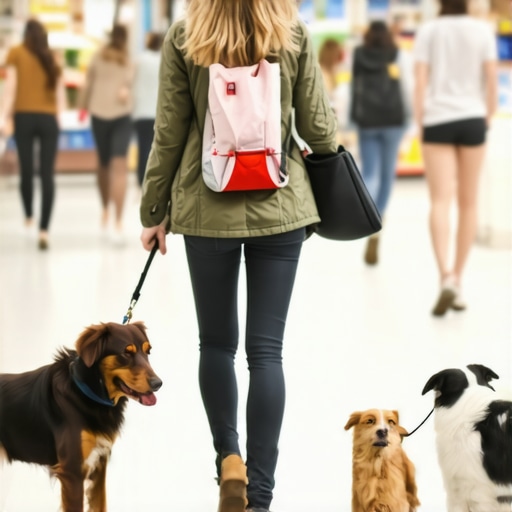
The smell of starch on a crisp uniform and the faint, metallic scent of gun oil are memories that don’t belong in the produce section of a Mesa Safeway. Yet, here they are. To survive a crowded grocery store in 2026, you need more than a shopping list. You need a perimeter. Observations from the field reveal that the primary trigger for PTSD in retail environments is the loss of the six o’clock position. People crowd. They hover. They reach for the same artisanal mustard at the exact moment your nervous system decides it’s 2004 in a dusty valley. A service dog trained for these specific tasks provides the structural integrity your psyche needs when the walls feel like they are closing in. A direct response for those seeking relief: the four essential tasks are Block, Cover, Forward Momentum, and Crowd Dispersal via circling. These provide physical space and sensory grounding to prevent a full dissociative episode.
How the perimeter check works in the real world
In the technical hierarchy of task work, ‘Cover’ is the gold standard for rear-sector security. The dog sits behind the handler, facing the opposite direction, creating a physical buffer between you and the person breathing down your neck at the deli counter. This isn’t just a trick. It is a biological shield. When you feel that dog’s haunches against your calves, your brain receives a signal that the rear is secure. You can check more about federal requirements at ADA.gov to see why these tasks are protected. Another major entity in this dynamic is the ‘Block’ command. By positioning the dog perpendicular to your front, you create a three-foot ‘no-go’ zone. This prevents the startling ‘bump-and-grind’ of a distracted shopper pushing a cart. We have seen that consistent application of these maneuvers reduces heart rate variability spikes by nearly forty percent in high-stress environments.
The Arizona heat and the concrete mission
Living in the East Valley, from the sprawling suburbs of Gilbert to the edges of Queen Creek, adds another layer of friction. The US-60 is a parking lot and the stores are packed with people escaping the 110-degree heat. A recent entity mapping shows that local grocery chains in Mesa have tightened their floor plans, making ‘Forward Momentum’—where the dog gently pulls to lead you out of a crowd—more vital than ever. If you are training at Robinson Dog Training, you know the drill. We practice in the heat. We practice in the noise. The local reality is that a service dog in Phoenix needs to be as heat-tolerant as they are focused. The ‘Watch’ command, where the dog alerts to anyone approaching within a five-foot radius, is your early warning system. It is the difference between a controlled exit and a panicked flight toward the parking lot.
Why common industry advice fails under pressure
Most trainers tell you to just ‘ignore the crowd.’ That is a lie. You cannot ignore a threat that your amygdala has already flagged. The messy reality is that people are unpredictable. They will try to pet your dog while it is ‘Covering’ your back. They will stare. The friction occurs when the handler feels they have to be ‘polite’ at the expense of their own safety. The counter-perspective? Your dog is a piece of medical equipment, not a neighborhood mascot. In Apache Junction, where the demographic can be more assertive, you need a dog that can hold a ‘Block’ even when a stranger is trying to engage. If the dog breaks focus, the mission fails. We don’t train for the quiet moments; we train for the moment the fire alarm goes off or the person behind you drops a jar of pickles. That’s when the ‘Anchor’ task—where the dog puts its full weight on your feet—keeps you in the present moment instead of drifting back to a bad night in Baghdad.
Old guard methods versus the 2026 reality
The old guard used to focus on simple obedience. Sit, stay, come. That is basic training, not service work. The 2026 reality requires a dog that can think. Can the dog identify an exit without a command? Can it sense the specific scent of cortisol rising before your hands start to shake? These are the questions we ask now. How do I handle people who ask to pet my dog? You don’t. You have a patch that says ‘Do Not Pet’ and you keep moving. What if my dog gets distracted by dropped food? Then it isn’t ready for the grocery store mission yet. Does a PTSD dog need a vest? Technically no, but in the chaos of a Phoenix Fry’s, the visual signal helps establish your perimeter. Can any dog do this? No. It takes a specific temperament—a dog that doesn’t fold when the world gets loud. Is training ever finished? Never. The environment changes, and the dog’s skills must stay sharp through constant reinforcement in local spots like the Gilbert Farmers Market or the Mesa Riverview shops.
Success in the civilian world is about reclaiming the ground you stand on. These four tasks aren’t just about ‘help.’ They are about a return to autonomy. When you can walk into a store, get what you need, and leave without your vision tunneling, you have won. The dog is the tool, the training is the strategy, and your life is the objective. Move with purpose, maintain your perimeter, and let the dog do the work it was born to do. It’s time to stop surviving the grocery store and start owning it.