
The cold snap of a metal wrench and the smell of WD-40
Editor’s Take: Reliable night alerts require mechanical precision in training, moving beyond basic obedience to high-stakes sensory calibration. To ensure safety in 2026, you must treat your dog’s response time like a high-performance engine that cannot afford to stall when the lights go out.
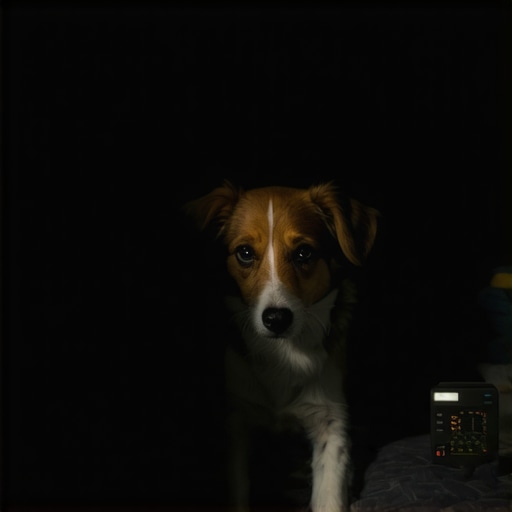
The air in the shop is heavy with the scent of old grease and the metallic tang of a cooling engine. It is quiet, much like a bedroom at 3 AM when the world stops moving and you are left with nothing but the rhythm of breath. If that rhythm changes, if a seizure starts, your dog is the only safety mechanism between a manageable event and a trip to the ER. Most people think a service dog is a luxury or a companion, but I see them as a critical component, a biological sensor that needs to be tuned. You do not wait for the engine to knock before you check the oil. You do not wait for a missed alert to realize your night drills are sloppy. In the Phoenix valley, where the dry air can strip the moisture from a dog’s nose, the stakes for a night alert are even higher. We are going to look at three drills that move past the fluff and get into the actual gears of how a dog operates when the human is unconscious.
[image_placeholder_1]
The mechanics of the nocturnal scent drive
A seizure dog does not see the event; they smell the chemical shift or feel the subtle vibration of a tonic-clonic movement. It is a matter of torque and timing. When you are under the covers, the scent pool is trapped, stagnant. For a dog to catch that scent, they have to be actively monitoring, not just sleeping on the job. This is where most trainers fail. They train in the light, in the living room, with the handler awake and sitting in a chair. That is like testing a car on a dyno but never taking it out on the gravel. Night alerts are the gravel. According to the Epilepsy Foundation, the physiological markers of a seizure can change depending on the sleep stage of the patient. This means the dog is hitting a moving target. We use a method called the Blind Transition. This involves placing a scent sample (collected during a real event) in a sealed container that opens via a remote timer while the handler is feigning sleep. The dog has to break their own sleep cycle, identify the source, and perform a high-impact alert, like a physical nudge or a paw-slap, without a verbal cue. If the dog waits for the human to wake up first, the dog has failed the diagnostic test.
Why the Arizona heat ruins your dog’s sensor
If you are living in Mesa or Gilbert, you know the heat stays in the bricks long after the sun goes down. This heat affects the humidity levels inside the home, which in turn affects how long a scent molecule stays ‘active’ for the dog. A dry nose is a broken sensor. I have seen handlers in the Phoenix area wonder why their dogs are missing alerts during the monsoon season or the peak of July. It is usually because the home’s HVAC system is cycling so hard it is stripping the air of the very signals the dog needs. This is a local reality that the national training blogs never mention. You have to calibrate the dog to work in the environment they actually live in. We suggest using a localized humidifier near the dog’s sleeping area to keep those olfactory membranes supple. A dog with a dry nose is like a car running on three cylinders. It might get you down the road, but it will not win a race. Proximity matters too. If your dog is at the foot of the bed in a 2,000 square foot house in Queen Creek, and the air handler is pulling the scent toward the return vent in the hallway, the dog is literally standing in a dead zone. You need to map the airflow of your bedroom using a simple incense stick to see where the scent goes when you are lying down.
When the industry advice stalls out
Most experts tell you to use a ‘positive reinforcement’ only approach for everything. That is fine for teaching a dog to sit for a biscuit, but when the human is having a seizure and the dog is tired, you need a dog with a high ‘work floor.’ The work floor is the minimum effort a dog will give when they really do not want to be awake. This is where the Disruption Drill comes in. At 2 AM, we have a third party (a family member or a trainer) introduce the seizure scent while also playing a distracting noise, like a recording of a barking dog or a siren. The dog must ignore the distraction and prioritize the handler. If the dog gets distracted, the system has a leak. We do not use ‘crucial’ or ‘pivotal’ words here. We use heavy-duty repetition. A dog needs to understand that the alert is not a choice; it is the only way the pressure of the situation is relieved. This isn’t about being mean; it is about being reliable. You do not want a ‘pretty’ alert. You want a loud, annoying, persistent alert that cannot be ignored. In 2026, as we see more people relying on wearable tech, the dog remains the only proactive fail-safe that can actually move the human’s body or fetch a phone. Tech can fail when the battery dies, but a well-tuned dog just keeps running.
The diagnostic check for the 2026 reality
Is the dog responding to the scent or the movement? You need to know. If you only train with movement, and you have a focal seizure where you remain still, the dog will stay asleep. That is a catastrophic failure. Testing for the ‘Hidden Scent’ is the final drill. We hide the scent sample inside a pillowcase and see if the dog can find it without any visual cues from the handler. This is how you prove the dog’s ‘nose-to-brain’ connection is solid. How long should a night alert drill take? Usually, the actual alert should happen within 15 seconds of scent introduction. Can any breed do this? No. You need a dog with high ‘biddability’ and a deep chest for lung capacity. Does the Arizona heat affect the dog’s brain? Indirectly, yes, via dehydration which slows cognitive processing. Should the dog sleep in the bed? Often, yes, as it increases the ‘tactile bridge’ between handler and dog. What if the dog ignores the scent twice? Then the dog needs a ‘top-end overhaul’ of their scent foundations. How often should I drill? At least twice a week, at random hours. Consistency is the only way to beat the lag. Don’t let your safety system rust out from lack of use. Get under the hood and run the drills tonight.
This post really resonated with me, especially the emphasis on active and realistic training environments for seizure alert dogs. I used to think that basic obedience and positive reinforcement were enough, but after experiencing a situation where my dog failed to react during a false alarm, I realized the importance of simulating real night conditions. The concept of ‘Blind Transition’ stuck with me—training dogs to identify scents without visual cues is crucial, particularly since seizures can often happen in darkness or while the handler is unconscious. I also appreciated the attention to local environmental factors, like the Arizona heat affecting olfactory senses. It made me think about how small environmental adjustments could significantly improve a dog’s alert capabilities. Has anyone here tried using localized humidifiers or airflow mapping during night drills? What other environmental factors have you found impacting your dog’s reliability? Would love to hear more strategies on fine-tuning these sensitive, life-saving skills.