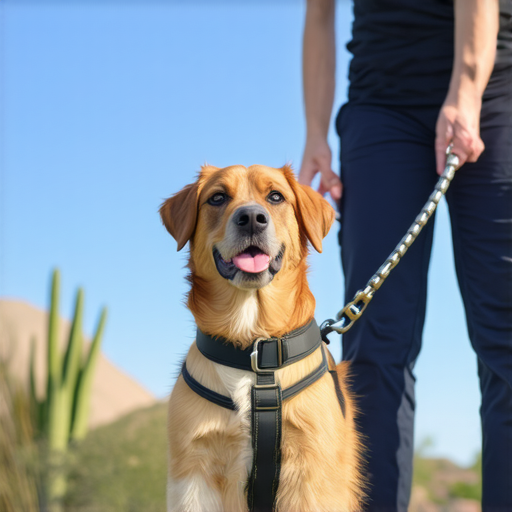
![Scent Training Success: 4 Diabetic Alert Dog Tips [2026]](https://servicedogtrainingaz.com/wp-content/uploads/2026/03/Scent-Training-Success-4-Diabetic-Alert-Dog-Tips-2026.jpeg)
The shop smells like WD-40 and cold, unyielding iron. You learn early on that if a machine isn’t clicking right, you don’t blame the metal. You look at the timing. You look at the fuel. Training a Diabetic Alert Dog (DAD) follows the exact same logic. It is not about ‘bonding’ or ‘vibes’ or any of that soft-focus fluff you see on social media. It is about a biological sensor—the canine nose—detecting a specific chemical shift in the human body. When your dog misses a low, that is a mechanical failure. Most trainers want to talk about feelings. I want to talk about parts and labor. Success in scent training requires four specific calibrations: high-fidelity sample collection, heat-adjusted humidity for the olfactory gasket, reward-timing precision, and environmental stress-testing. If you skip a step, the engine stalls. This is the reality of life-saving hardware in 2026.
The Editor’s Take: Scent training is a high-stakes engineering project where the dog’s nose is the primary sensor. Reliability comes from rigorous data consistency and environmental adaptation, not just repetition.
The chemistry under the hood
Your breath is the exhaust pipe of your metabolism. When blood sugar drops, the body produces Isoprene. That is the target. It is a volatile organic compound that acts as a signal for the dog. Think of it like a leak in a vacuum line. You can smell it if you know what you are looking for, but the dog lives in it. Most people mess this up by using old samples. A sample sitting in a freezer for six months is junk. It is stale fuel. You need fresh, ‘hot’ samples taken exactly when the blood glucose is crashing. Research from clinical trials on canine scent detection proves that the chemical signature changes rapidly. If the sample is contaminated with the smell of the plastic container or your lunch, the dog learns to alert to the wrong thing. I have seen guys try to train dogs using samples stored in cheap Tupperware. That is like trying to tune a Ferrari with a hammer. You use glass. You use sterile gauze. You keep the sensor clean.
[IMAGE_PLACEHOLDER]
The dog’s olfactory bulb is a complex manifold. It processes scent through a dual-pathway system that separates air for breathing and air for analysis. To get the most out of this hardware, you have to ensure the dog is ‘hunting’ for the scent rather than just waiting for it to hit them. We call this active sniffing. It increases the pressure in the nasal cavity. It forces the molecules against the receptors. It is torque for the nose.
When the Arizona heat fries the sensors
Here in the Valley, from the dusty corners of Queen Creek to the asphalt heat of Phoenix, we have a specific problem: humidity. Or the lack of it. A dog’s nose works because of a thin layer of mucus that traps scent molecules. It is a wet gasket. In 115-degree Mesa heat, that gasket dries out. The dog becomes functionally blind. If you are training your dog in Gilbert or Apache Junction during the summer, you are fighting a losing battle unless you hydrate the system. I tell people to carry a spray bottle. Not for the dog to drink, but to mist the air. It creates a micro-climate that allows the Isoprene molecules to bind to the receptors.
Local laws in Arizona regarding service dog access are clear, but your dog’s ability to perform is governed by biology, not legislation. If you are walking through a parking lot in Queen Creek and the ground temperature is 160 degrees, your dog is focused on its paws, not your blood sugar. You are asking a machine to run while the radiator is melting. You have to be smarter than the environment. Use boots. Use cooling vests. Keep the sensor operational. If the nose is dry, the alert is a lie. That is a rule we live by in the shop.
The myth of the perfect alert
People want a dog that acts like a robot. They want a polite paw touch every time. Real life is messier. Sometimes the alert is a frantic stare. Sometimes it is a nudge that feels like a punch. The problem isn’t the dog; it’s the operator. You have to reward the ‘intent’ to scent, not just the finished product. In the early stages, if the dog even looks at the sample, you pay them. High-value rewards only. We are talking about steak, not some dry kibble that’s been sitting in a bag for three months. You want the dog to think that finding that scent is the greatest thing that has ever happened in the history of the world. (Actually, it’s just basic Pavlovian conditioning, but don’t tell the ‘dog whisperers’ that).
I see it all the time in our puppy training programs. Owners get frustrated when the dog misses a mark. They get tense. The dog smells the cortisol—the stress—and it masks the Isoprene. Now the dog is alerting to your anger, not your glucose. You just created a feedback loop of failure. You have to keep the cockpit calm. If you are spiking, your dog knows it before you do. If you start panicking, you are just throwing noise into the signal. Shut up and let the dog work. It is a tool. Use it like one.
Why your dog ignores the spike
Old guard trainers used to think dogs could only do one thing. They thought a dog was either a pet or a worker. That is nonsense. A dog is a multi-processor. But even the best hardware has a limit. In 2026, the world is louder and more distracting than ever. If your dog can find a sample in your quiet living room but fails at a Suns game in Phoenix, you don’t have a trained dog. You have a hobby. You have to proof the behavior. This means introducing ‘distraction scent’—food, other dogs, the smell of a dirty garage. If the dog can’t pick the Isoprene out of a lineup of bacon and old socks, the calibration is off.
Frequently Asked Questions for the Modern Handler
Can my dog detect high blood sugar too?
Yes, but the chemical signature is different. Hyperglycemia often smells like ketones—sweet, fruity, like rotting apples. It is a different gear on the same transmission. You have to train for it specifically.
What if my dog starts ‘faking’ alerts for treats?
We call that ‘button pushing.’ The dog is trying to cheat the system. You fix this by only rewarding when you have a confirmed reading on your CGM or finger stick. No confirmation, no paycheck. The dog learns that honesty is the only way to get paid.
Does the breed of dog really matter?
A Lab has more receptors than a Terrier. It is a bigger engine. Can a smaller dog do it? Sure. But you are working with less displacement. I prefer the working lines—dogs that don’t know how to quit.
How often should I retrain?
Every single day. Scent memory fades like old paint. If you aren’t running drills, the dog’s ‘resolution’ for the scent drops. Five minutes a day keeps the sensor sharp.
Is scent training better than a Continuous Glucose Monitor (CGM)?
A CGM measures interstitial fluid, which lags behind blood sugar by 15 minutes. A dog smells the breath, which is nearly real-time. The dog is the early warning system; the CGM is the confirmation. Use both. Don’t be a hero.
There is no finish line in this business. You don’t ‘finish’ training a DAD any more than you ‘finish’ maintaining a truck. You keep the oil changed, you keep the tires rotated, and you keep the nose sharp. If you treat your dog like a precision instrument, it will save your life. If you treat it like a toy, well, don’t be surprised when it breaks down when you need it most. Keep the samples fresh and the rewards heavy. Everything else is just noise.