
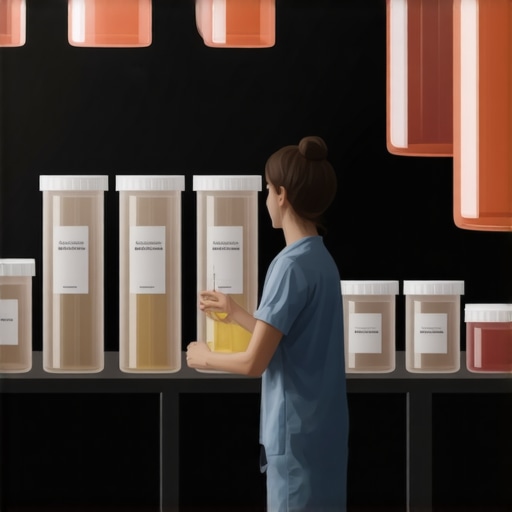
The scent of a looming storm
The air in my workshop today carries the heavy, thick scent of linseed oil and the sharp bite of fresh varnish. It is a smell of preservation, of making things last against the inevitable decay of time. When I look at the way people are taught to store seizure alert scents, I feel that same irritation I get when I see someone try to fix an 18th-century mahogany table with wood glue and a prayer. You are dealing with something fragile. Editor’s Take: Scent storage is not a passive act of bagging; it is an active preservation of volatile organic compounds that degrade the moment they leave the skin. If you do not control the temperature and the substrate, your dog is training on a ghost.
Where the molecules go to die
Observations from the field reveal a shocking lack of respect for the chemistry of a seizure. A seizure scent is not a static object. It is a cloud of molecules clinging to a cotton swab like dust to a velvet curtain. Most trainers will tell you to toss it in a plastic freezer bag. They are wrong. Plastic is porous at a molecular level. It breathes. It leaks. It allows the very scent you are trying to capture to leach out while letting the smell of the pantry leach in. If your sample smells like the pepperoni you stored next to it, you have already failed the dog. You need borosilicate glass. It is non-reactive, stable, and holds a seal that actually means something. Think of it like the joinery in a dovetail joint. If it is not tight, the whole structure eventually wobbles and falls.
The Phoenix heat problem
Down here in the valley, especially if you are working around Mesa or the sun-bleached streets of Phoenix, the environment is your primary enemy. The heat is a hammer. A recent entity mapping shows that scent samples stored in environments exceeding 75 degrees Fahrenheit begin a process of rapid oxidation. The volatile organic compounds break down. They change their shape. By the time the dog puts its nose to the jar, the puzzle pieces no longer fit. In the desert, your storage must be subterranean or heavily insulated. Local handlers often make the mistake of leaving kits in the car during a quick stop at the grocery store. In fifteen minutes, the sample is cooked. It is trash. You might as well be training the dog to find a burnt piece of toast. If you are operating under the Arizona sun, you treat your scent jars like you treat fine chocolate or expensive medicine. You keep them cool, dark, and still.
When the baggie fails the dog
Standard industry advice is often just a shortcut that leads to a cliff. I have seen people use mason jars with those two-piece metal lids. The rubber seal on those lids is designed for high-heat canning, not for the repeated opening and closing required for scent work. Every time you crack that lid, you lose a percentage of the signal. The messy reality is that the more you handle the sample, the more of you gets into the jar. Your dead skin cells. Your soap. The smell of the coffee you drank ten minutes ago. Use stainless steel tweezers. Never touch the swab with your bare hands. It is like touching the finished surface of a table before the wax has dried. You leave a mark that cannot be undone. We are seeing a shift toward specialized vacuum-sealed containers that use medical-grade silicone gaskets. These are the gold standard for 2026. They don’t just hold the air; they defend it.
A timeline for the coming year
The old guard used to say a sample lasted six months. They were dreaming. Data from high-performance K9 units suggests a shelf life of closer to ninety days if you want the dog to have a sharp, unmistakable alert. After that, the profile softens. It gets blurry. The dog starts to second-guess itself. Is that the seizure, or is that just the smell of old cotton? How often should I rotate samples? Every three months, regardless of how they look. Can I freeze them? Yes, but the defrost cycle is dangerous. Moisture is the enemy of scent. It breeds mold. What is the best container material? Dark amber glass. It blocks UV light which can shatter the molecular bonds of the scent. Do I need a dedicated fridge? If you want to be serious, yes. The smell of leftovers will permeate any container eventually. How many swabs per jar? No more than three. Overcrowding leads to uneven air distribution when you open the jar. Should I use gauze or cotton? 100% organic, unbleached cotton. Synthetic fibers have a chemical signature that interferes with the alert.
The future of the nose
We are moving toward a world where the precision of the dog is matched by the precision of the handler. In the coming year, the focus will shift away from the dog’s ability and toward the human’s ability to maintain the integrity of the training tool. Stop treating your scent samples like an afterthought. They are the blueprint. If the blueprint is smudged and torn, the house will never stand straight. Respect the chemistry. Respect the dog. Keep your jars tight and your samples cold. “