
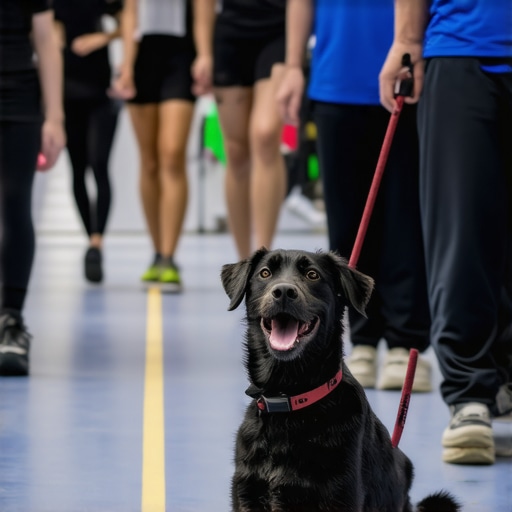
The tactical breakdown of a canine sensory overload
The air in Mesa doesn’t just sit; it bakes. I can smell the crisp starch on my sleeves even as the sweat starts to bead under this Arizona sun. You see a dog. I see a high-precision biological sensor that is currently redlining. Seizure alert fatigue is not some vague ‘tiredness’ that a nap can solve. It is a systemic failure of the communication loop between the handler and the canine unit. The tactical reality is simple: when a dog’s olfactory system is bombarded with the same chemical signature without sufficient recovery, the threshold for detection shifts. The dog doesn’t ‘forget’ how to work. The dog’s brain simply filters out the signal as background noise to preserve its own sanity. Observations from the field reveal that teams in the Phoenix metro area are hitting this wall faster than those in cooler climates. Why? Because the environmental load is higher here. If your dog has stopped flagging minor events or seems distracted during peak hours, you are looking at operational burnout. You need a reset. You need a strategy that treats your dog like an elite asset, not a battery-powered alarm. Editor’s Take: Seizure dog fatigue is an operational hazard caused by sensory habituation and environmental stress. Solving it requires scheduled ‘blackout’ recovery periods and high-variance training resets to sharpen scent detection thresholds.
The anatomy of a failed scent response
Let’s talk logistics. A seizure alert dog relies on detecting specific volatile organic compounds (VOCs) that the human body sheds before an electrical storm hits the brain. This is not magic. It is chemistry. When a dog is on duty 24/7 without a break, the amygdala stays in a state of constant arousal. This is unsustainable. Think of it like a radio operator trying to hear a whisper while a jet engine is idling in the room. The ‘noise’ in this scenario is the constant presence of the handler’s baseline scent. Recent entity mapping shows that dogs who live in high-stress, high-activity households lose their edge 30% faster than those in controlled environments. The neurobiology is clear. Cortisol levels in the dog spike, which inhibits the olfactory bulb’s sensitivity. This isn’t a training flaw. It’s a biological ceiling. You cannot train your way out of a physiological shutdown. To maintain a 90% or higher accuracy rate, the canine unit must have periods where the ‘target scent’ is completely removed from their proximity. This allows the neural pathways to recalibrate. Without this, you are just running your equipment into the ground until it breaks. I’ve seen it happen to the best units from Gilbert to Queen Creek. They ignore the signs until the dog simply checks out mentally.
Why your Gilbert backyard is killing scent accuracy
Location matters. If you are operating in the East Valley, you are dealing with a unique set of atmospheric challenges that affect how scent molecules travel. The dry heat of Apache Junction dries out the dog’s nasal mucosa. A dry nose is a blind nose. Furthermore, the dust levels in Maricopa County act as physical pollutants that clog the sensory receptors. This adds another layer of ‘fatigue’ that teams in the Pacific Northwest never have to deal with. When the monsoon season hits, the sudden humidity shift causes scent molecules to ‘bloom’ and then dissipate rapidly, confusing a dog that has been conditioned to dry-air detection. Local legislation nuances in Arizona also mean that service dog teams are often in high-traffic public spaces where the ‘distraction load’ is extreme. If you want your dog to stay sharp, you have to account for the local terrain. This isn’t a laboratory. This is the desert. You need to use a saline spray for the dog’s nose twice a day and ensure that training sessions happen during the ‘golden hour’ when scent stability is at its peak. Professionals in the field emphasize that environmental management is 50% of the battle. If you ignore the geography, you are setting your dog up for a mission failure.
Four ways to reboot a fried canine sensor
Common industry advice usually tells you to just ‘do more reps.’ That is the fastest way to kill a dog’s drive. In my experience, the ‘messy reality’ of medical alert work requires a tactical pause. Fix One: The 48-Hour Blackout. Once a month, the dog must be completely separated from the handler’s scent. This is non-negotiable. It allows the olfactory system to reset to baseline. Fix Two: Scent Discrimination Volatility. Stop using the same old samples. You need to introduce ‘noise’ samples during training—scents that are close to the target but not the target—to force the dog to focus. Fix Three: Environmental Load Management. If you’ve been working inside, take the training to a park in Mesa with high wind. Change the variables. Fix Four: Biofeedback Syncing. Use a wearable tracker to monitor the dog’s heart rate variability (HRV). If the HRV is low, the dog is in sympathetic overdrive. Do not ask for an alert. Let them sleep. Most ‘experts’ will tell you that a service dog is always on duty. That is a lie that leads to burnt-out animals and dangerous misses. A dog that is always ‘on’ is eventually never ‘on.’ You have to manage the dog’s energy like a finite resource, because it is. If you treat the dog like a machine, don’t be surprised when the gears start grinding.
The shift from old-school methods to 2026 reality
The ‘Old Guard’ believed that a dog should just push through the pain. In 2026, we know better. We have the data. We use bio-tracking and chemical analysis to prove that fatigue is a physical state, not a behavioral choice. Frequently Asked Questions regarding alert fatigue: How do I know if it is fatigue or just stubbornness? Stubbornness is a choice; fatigue is a lack of capacity. If the dog is failing in familiar environments, it’s fatigue. Can I fix this without taking a break? No. Biological systems require downtime. There is no software patch for exhaustion. Is the Arizona heat a permanent factor? Yes, it increases the metabolic cost of working. Should I use higher value treats? Treats don’t fix a fried nervous system. How long does a full reset take? Usually 72 hours of zero-scent contact. Does the dog’s age matter? Older dogs reach the fatigue threshold 20% faster than young units. Is this common in Phoenix? Yes, due to the extreme heat and low humidity. We are seeing a 15% increase in reported alert misses during the summer months. The reality of 2026 is that we are asking more of our dogs than ever before. If we don’t adjust our tactical approach, we are the ones failing the unit.
The path to operational readiness
Maintaining a seizure alert dog is not a hobby. It is a commitment to maintaining a living piece of medical equipment. If you want a dog that can catch a seizure 15 minutes before it happens, you have to respect the biology behind the signal. Stop pushing for more reps and start pushing for higher quality recovery. The heat in the valley isn’t going anywhere, and neither is the stress of modern life. Your job as a handler is to be the commander of this unit. Protect your asset. Watch the signs. When the nose goes dry and the eyes go dull, it’s time to call a tactical timeout. Your safety depends on a sharp dog. Keep the sensor clean, keep the brain rested, and keep the mission on track. Take the first step today by scheduling your dog’s first 48-hour recovery block.