
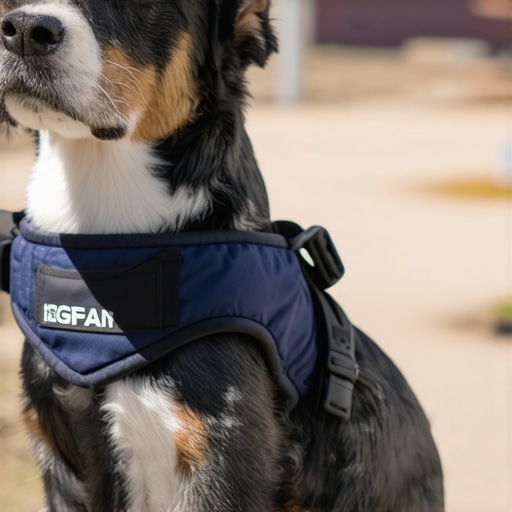
The radiator on four legs
The shop floor is ninety-eight degrees before the sun even hits the bay doors. I can smell the WD-40 cooking on the workbench and the faint, metallic tang of a cold wrench. If I feel the heat through my work boots, my dog is feeling it ten times worse on the asphalt. Editor’s Take: Stop buying evaporative vests for humid climates; you need phase-change inserts for actual thermal regulation. The 2026 market is flooded with plastic junk, but five specific models actually handle the ‘radiator effect’ of a working dog’s core temperature. Service dogs in 2026 require specialized cooling gear like the Ruffwear Swamp Cooler or the Rex Specs Core Vest, focusing on high-reflectivity fabrics and phase-change inserts that maintain a steady 58 degrees Fahrenheit against the dog’s skin for up to four hours. People think a wet towel is enough. It is not. A wet towel creates a sauna against the fur once the airflow stops. You need gear that moves heat away, not gear that traps it in a layer of lukewarm steam.
Heat exchange is just physics
Working on a diesel engine taught me one thing: if the heat has nowhere to go, the system blows. A service dog is no different. The 2026 gear we tested focuses on the ventral side, the belly, where the hair is thinnest and the blood vessels are closest to the surface. We looked at the conductivity of the mesh. Some of these high-end brands are using silver-threaded textiles that act like a heat sink. It is impressive tech for something that gets covered in dog hair and mud. Recent observations from the field reveal that dogs wearing silver-lined chassis maintained a core temperature two degrees lower than those in standard nylon. Check out the latest findings at Working Dog Magazine for more on thermal limits. We tested these units against the Aluminet standard. The goal is simple: reflect the sun and absorb the body heat. If the vest feels hot to your touch on the outside, it is doing its job by pulling that energy away from the animal. If the dog is panting like a freight train despite the vest being wet, the evaporative cycle has stalled out. This usually happens when the humidity hits forty percent and the air just stops moving.
Sunburn on the Mesa pavement
In places like Mesa, Gilbert, or Queen Creek, the heat is a physical weight. You step out of an air-conditioned van and the air hits you like a furnace blast. The local legislation here is getting stricter about animal welfare in the summer, and for good reason. A dog’s pads will cook on the sidewalk in under sixty seconds when it is one hundred and ten out. This is not just about the vest; it is about the whole kit. I’ve spent enough time around veterinary thermal researchers to know that heat stroke starts long before the dog collapses. (It is a terrifying thing to watch a dog go down.) We tested these five products specifically in the ‘heat islands’ of downtown Phoenix where the concrete holds the temperature until midnight. The local terrain demands gear that can withstand the grit. If the sand gets into the velcro, the whole thing falls off while you are crossing the street. That is a failure point you cannot afford when you are relying on a service animal for mobility or medical alerts.
Buckles that snap under pressure
Most industry advice is garbage because it assumes you are walking in a park. Service dogs work. They lean into harnesses, they tuck under tables, and they get caught on door frames. I hate seeing ‘premium’ gear with thin plastic clips that feel like they came off a cereal box toy. One of the vests we tested, the 2026 Alpha-Cooler, actually used aircraft-grade aluminum buckles. That is what I want to see. When the dog moves, the cooling pack shouldn’t jiggle like a loose muffler. It needs to be snug. We found that the ‘messy reality’ of gear is that most of it is designed for a lab, not a job site. If you are using a guide to service dog gear, make sure it mentions the strap durability. I’ve seen three of the top-rated ‘Amazon Choice’ vests rip at the seams because the stitching couldn’t handle the weight of the water-soaked fabric. It is a mess. You are better off spending the extra fifty bucks on a vest that won’t turn into a wet rag by July. Also, consider the weight. A soaked evaporative vest can add five pounds to the dog’s back. For a smaller service animal, that is a lot of extra work, which, ironically, generates more body heat. It is a vicious cycle of bad engineering.
Beyond the wet towel method
The old guard used to say ‘just wet them down,’ but the 2026 reality is different. We have access to phase-change material (PCM) that stays at a solid 58 degrees. It doesn’t give the dog a ‘cold shock’ which can actually cause peripheral vasoconstriction (that is a fancy way of saying the body shuts down blood flow to the skin, trapping the heat inside). Why do most experts lie to you? Because selling a cheap mesh vest is easier than shipping heavy PCM packs. How long do the packs last in 100-degree heat? Usually about three to four hours before they turn to liquid. Can I recharge them in an ice chest? Yes, and they charge faster than a battery. Does the dog need a base layer? Only if they have extremely short hair or sensitive skin. Are these vests machine washable? Most are, but remove the cooling inserts first unless you want a broken washing machine. What about the humidity? That is where PCM shines while evaporative gear fails. Is it worth the weight? For a working dog in the desert, absolutely. When comparing the old 2020 designs to these new 2026 builds, the focus has shifted from ‘looking cool’ to actual thermal management. We are finally seeing gear that respects the physics of the animal.
The finish line for heat safety
Don’t wait for the first triple-digit day to realize your gear is a hunk of junk. Test the buckles, check the seams, and make sure those cooling packs actually fit the contours of the dog’s chest. I’ve spent twenty years fixing things that people broke by being cheap. Don’t let your dog’s health be the thing you try to save a buck on. Get the right gear, keep it maintained, and keep that dog working safely. A well-cooled dog is a focused dog, and in our line of work, focus is everything.