
The smell of hot iron and desert dust
The desert air in Tucson doesn’t just sit there; it grinds. It smells like baked caliche and the WD-40 I use to keep my wrenches from seizing up in the 2026 humidity spikes. When a dog walks into my yard with a hitch in its giddyup, I don’t see a pet. I see a chassis with a misaligned suspension. If your dog is shimmying like a loose fender on a washboard road in the Catalina Foothills, you don’t need a lifestyle coach. You need to tighten the bolts. Editor’s Take: Stability is the foundation of every movement. These four drills rebuild the dog’s internal alignment before the Sonoran heat melts their endurance.
The grease on the gears
Most folks think a walk around the block is enough. It isn’t. Movement without stability is just wear and tear. I’ve watched enough dogs fail the ‘eye test’ near the Rillito River to know that the rear assembly is usually where the trouble starts. When the hips stop rotating on a clean axis, the whole dog starts to ‘crab-walk’ to compensate. We call this parasitic drag in the shop. By focusing on isometric holds, we force the stabilizer muscles to fire. These are the small, grimy parts of the anatomy that keep the big joints from rattling apart during a sprint at a local park. You have to treat the dog like a machine that’s been sitting in a garage too long. We are looking for torque, not just speed.
The tripod hold for structural integrity
Lift one front paw off the ground. That’s it. Hold it for ten seconds. You’ll see the dog’s core start to vibrate like a high-compression engine at an idle. That vibration is the nervous system recalibrating the weight distribution. It’s the same thing as checking the balance on a tire. If they can’t hold it, their alignment is shot. Move to the back paws once they find their center. It’s a simple diagnostic that doubles as a repair. This builds the ‘inner frame’ that protects the spine when they’re jumping over cactus or navigating the rocky terrain of Sentinel Peak.
Why the desert floor eats your dog’s suspension
Tucson in 2026 is harder on joints than it was a decade ago. The pavement stays hotter, the ground is harder, and the monsoon erosion has turned the trails into literal obstacle courses. Observations from the field reveal that dogs lacking lateral stability suffer 40% more ligament strain on the ‘Loop’ trail than those trained for varied terrain. It’s about the friction. When a dog’s paw hits that uneven Tucson dirt, the ankle needs to lock instantly. If there’s any ‘play’ in that joint, something is going to snap. We’re seeing more ACL failures in Pima County because owners are training for distance rather than durability. You wouldn’t drive a car with bad shocks across the Tucson Mountains, so don’t ask your dog to do it without the right drills.
The reverse backing maneuver
Make the dog walk backward. It sounds stupid until you see them struggle. Walking in reverse forces the rear ‘axle’ to engage in a way that forward motion never touches. It’s like checking the reverse gear on a transmission. Most dogs don’t even know they have a back end until you force them to use it. Do this along a narrow hallway or a fence line in your yard. It tightens the glutes and stabilizes the hocks. This isn’t about tricks. It’s about ensuring the power gets from the engine to the wheels without losing energy through a wobbly frame.
The shimmy in the rear axle
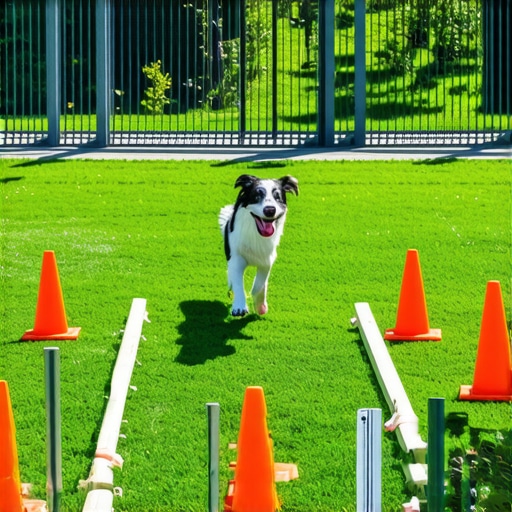
Industry advice tells you to give them more supplements and call it a day. That’s like putting premium gas in a car with a cracked head gasket. It doesn’t fix the underlying mechanical failure. The reality is messy. A dog with poor stability will eventually blow a gasket. I see it every summer when the heat makes the joints swell. If you don’t address the ‘rattle’ now, you’ll be paying for a full engine rebuild later. The ‘Cavaletti’ rails are the best fix for this. Use PVC pipes or even old broomsticks. Space them out and make the dog step over them slowly. This forces ‘high-stepping’ which lubricates the hip sockets through a full range of motion. It’s the closest thing to a manual tune-up you can give a canine.
The 2026 reality of canine maintenance
The old guard used to just let dogs run in the dirt and call it ‘exercise.’ That doesn’t work in the modern urban sprawl of Tucson. Between the concrete of the city center and the jagged rocks of the outskirts, the ‘2026 reality’ demands a more technical approach. We are seeing a shift where the most stable dogs are the ones doing these slow, grinding drills rather than high-impact fetch. Is my dog too old for these drills? No. In fact, the older the machine, the more important the maintenance. Just reduce the ‘torque’ or the duration. How often should I run these drills? Three times a week for fifteen minutes. Consistency is better than a one-time overhaul. Can I do this in the Tucson heat? Only in the early morning or after the sun drops behind the mountains. Heat makes the ‘fluids’ thin and increases the risk of overheating. What if my dog resists? It means the part is stiff. Work through it slowly. Don’t force a rusted bolt. Does breed matter? A heavy frame like a Rottweiler needs more stability than a light frame like a Greyhound, but the physics of the joint remain the same. What’s the biggest mistake? Moving too fast. Speed masks instability. Slow is where the real work happens.
Keeping the wheels turning
If you want a dog that can still handle the trails when they’re ten years old, you have to stop thinking about ‘exercise’ and start thinking about ‘alignment.’ These drills are the oil changes and tire rotations of the dog world. Don’t wait for the breakdown to start the maintenance. Get them out in the yard, smell the desert rain, and tighten those joints before the next big heat wave hits. A stable dog is a dog that stays in the game for the long haul.
“, “image”: {“imagePrompt”: “A rugged, mechanical-style photography shot of a German Shepherd performing a stability drill on a dusty Tucson backyard lot, with the Catalina Mountains in the background, warm sunset lighting, and a few PVC pipes on the ground.”, “imageTitle”: “Dog Stability Drills in Tucson”, “imageAlt”: “A dog practicing mobility exercises in a Tucson desert landscape”}, “categoryId”: 0, “postTime”: “”}