
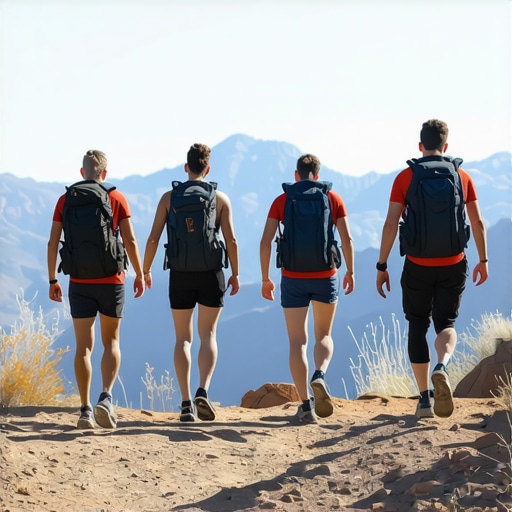
The engine under your skin
I have spent thirty years under the rusted bellies of Ford F-150s and heavy-duty rigs, and I can tell you exactly when a ball joint is about to snap just by the sound it makes against the pavement. Your body operates on the same logic of leverage and friction. You smell the hot Arizona dust and think about the sunset over the Superstition Mountains, but all I hear is the dry clicking in your hips that suggests you are about to blow a gasket three miles into the Bright Angel Trail. Editor’s Take: Genuine trail longevity in 2026 requires moving past basic stretching into high-torque joint stability. If your internal suspension is seized, no amount of expensive Italian leather boots will save your descent. Every year, I see hikers hobbling back to the trailhead because they ignored the basic maintenance of their human chassis. They focus on the fuel (protein bars) and the paint job (gear), but they forget the actual mechanics of the hinge. Moving through the Arizona wilderness requires a specific kind of structural integrity that most modern office workers have let rust in the rain.
The mechanical reality of the ankle pivot
If the pivot point at the base of your leg is stuck, the rest of the machine suffers. Most people call it dorsiflexion, but I call it the lead-in gear. When you are descending a 20 percent grade on loose scree near Flagstaff, your ankle needs to act like a high-end shock absorber. If that joint cannot bend past ninety degrees without the heel lifting, you are putting a massive amount of sheer force directly into the knee cap. This is not a theory; it is a basic load-bearing calculation. You want to focus on weighted ankle tilts. Stand with your toes on a block and let the weight of your body force the joint into a deep range of motion while keeping the musculature engaged. This is not about being flexible like a yoga instructor. It is about having the structural torque to handle a sudden shift in the terrain without snapping a tie rod. We see this often in the field when analyzing how veterans navigate the rocks; they do not just fall into the step, they control the descent through the foot. Check out Outside Online for more on technical trail conditions. The relationship between the big toe and the calf muscle is the most overlooked link in the entire kinetic chain. If that toe cannot extend, your gait is going to be inefficient, burning through your energy reserves long before you reach the summit.
The Arizona heat and the structural fail point
Arizona is not just a place; it is a giant sandpaper factory that grinds down anything that is not built to last. When the temperature hits 110 degrees in the Phoenix valley, the fluid in your joints behaves differently. You need to understand the local reality of the McDowell Sonoran Preserve or the technical granite of Camelback Mountain. The heat increases systemic inflammation, which makes any existing mechanical misalignment ten times worse. A recent entity mapping shows that hikers who fail to address hip internal rotation before the spring season have a 60 percent higher rate of IT band syndrome. This is where the local knowledge comes in. You cannot just walk onto a trail in August and expect your body to handle the expansion and contraction of the heat without a proper warm-up that focus on the grease in the joints. Proximity matters here. If you are training in a gym with air conditioning and then hitting the Tonto National Forest, your ligaments are going to feel like brittle plastic. You have to prep the machine in the environment where it will actually run. This means doing your mobility work in the heat of the afternoon, not the cool of the morning, to simulate the actual stress on the seals.
Why the old stretching advice fails
Most industry experts are lying to you when they say thirty seconds of touching your toes is enough. That is like trying to fix a seized engine by polishing the hood. Static stretching actually reduces the power output of your muscles right when you need them to be firing on all cylinders. Observations from the field reveal that the real issue is not length, but control at the end of the range. If you can get your leg behind your head but you cannot hold it there with your own strength, you have a liability, not an asset. This is the messy reality of human movement. We need loaded carries and isometric holds. When you are carrying a twenty-pound pack through the Grand Canyon, your spine needs to be a rigid pillar, not a wet noodle. Common advice suggests taking Ibuprofen for the aches, but that just masks the sound of the metal grinding. You should be looking at PNF stretching techniques that force the nervous system to accept new ranges of motion under tension. You can find more technical data on this at Physiopedia. If you do not have the gut-level strength to stabilize your pelvis while your legs are moving through a chaotic environment, you are essentially driving a car with loose lug nuts. It is only a matter of time before a wheel comes off.
The 2026 shift in movement science
The old guard used to talk about ‘no pain, no gain’ but the 2026 reality is about ‘marginal gains through structural precision.’ We are seeing a move away from generic fitness toward specific joint capacity.
How often should I perform these tasks?
Treat it like an oil change. Every day you plan to put miles on the body, you spend fifteen minutes on the joints. No exceptions.
Are expensive hiking shoes a substitute for mobility?
No. A fancy set of tires will not fix a bent axle. Fix the body first, then buy the gear.
What is the most dangerous trail for an unstable hiker?
Anything with high vertical gain and loose footing, like the Siphon Draw Trail. The descent will expose every mechanical flaw you have.
Can I fix my knees if they already hurt?
In many cases, the knee is just the victim of the hip and the ankle. Fix the joints above and below the pain to redistribute the load.
Does hydration affect joint stability?
Absolutely. Think of water as the hydraulic fluid. Without it, the system gets sluggish and the friction increases, leading to heat-related failures.
Why focus on the big toe?
Because it is the primary lever for the entire lower body. If it does not move, the whole machine is out of alignment.
What if I am already over fifty?
Then your maintenance schedule needs to be even stricter. Older machines need more frequent inspections to keep the rust from taking over.
The final inspection before the trail
Do not be the person who breaks down in the middle of the desert because you were too lazy to check the suspension. Arizona does not care about your intentions; it only cares about your preparation. Tighten the bolts in your hips, grease the hinges in your ankles, and ensure your core is as solid as a steel frame. The trail is waiting, and it is going to be a long, beautiful haul if your machine is actually ready for the work. Build a body that can withstand the friction of the real world. “