
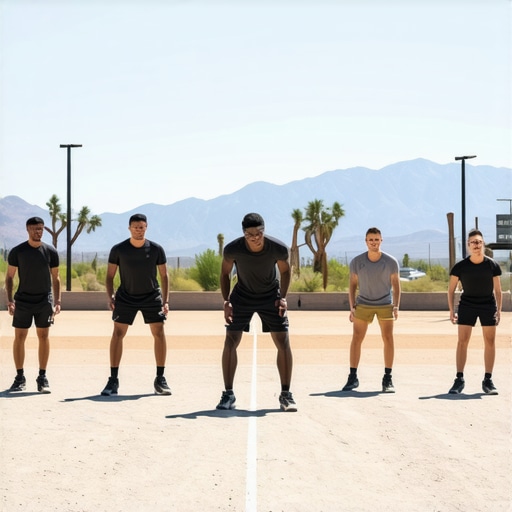
The desert does not care about your balance
The air in Mesa smells like baked dirt and hot copper right now. You can hear the rhythmic clicking of a cooling engine nearby, but your focus is on the ground. Stability for an Arizona dog handler isn’t a luxury; it is the physical insurance policy that keeps your ACL from snapping when a ninety-pound Malinois decides to chase a coyote across a Gilbert backyard. Most trainers focus on the dog, yet they ignore the handler’s chassis. You need ankle eversion and hip internal rotation to survive the sudden kinetic shifts of K9 work in the heat. Editor’s Take: This is a technical blueprint for staying upright when the environment and the animal conspire to put you on the pavement. Mobility is your only defense against the physics of a lunging dog. [IMAGE_PLACEHOLDER]
The mechanics of a high-torque pivot
The relationship between a handler’s center of gravity and a dog’s drive is basically a game of leverage and friction. When the dog hits the end of that lead, the force travels through your arm, down your spine, and into your feet. If your joints are locked like a rusted bolt, something is going to break. You need active tension, not passive flexibility. Think of your body as a suspension system. You want enough give to absorb the shock but enough stiffness to keep the wheels from falling off. Most guys think stretching is the answer, but stretching without load is just a way to make your joints sloppy. You need drills that mimic the chaotic offset load of a working dog. Check out these professional insights on tactical athlete mechanics and professional handler safety to see why the old ways are failing.
The Queen Creek gravel trap and other local hazards
Arizona terrain is a nightmare for anyone who values their ankles. One minute you are on flat concrete in downtown Phoenix, the next you are trying to find a footing on the loose decomposed granite of an Apache Junction trail. This local grit acts like ball bearings under your boots. Proprioception drills must mimic these sliding surfaces. We aren’t just training for strength; we are training for the ‘save.’ When your foot slips on a patch of dry Mesa silt, your nervous system has milliseconds to recalibrate your weight. It’s about the micro-adjustments in the midfoot that keep the rest of your frame aligned.
Why the standard gym routine fails the working handler
Standard gym drills fail because they assume the world is flat and the weights are predictable. A barbell doesn’t decide to lunge left when you are expecting it to go right. The messy reality of dog handling is that the load is reactive. If you are doing static lunges in a climate-controlled room, you are preparing for a world that doesn’t exist. You need to be doing reactive pivots. Stand on one leg, have someone throw a weighted ball at you from an off-angle, and maintain your ‘stack.’ That is how you prep for a dog. Forget the clean floors and the air conditioning; if you aren’t training in the dust and the heat, you are just kidding yourself.
The 2026 protocol for tactical stability
The old guard used to say ‘just dig your heels in.’ That’s a great way to get a spinal injury. The 2026 reality prioritizes loaded carries and reactive pivots. We don’t stand still anymore. We move with the energy.
Can these drills prevent heat-related joint fatigue?
Heat thins the fluid in your joints and slows your reaction time, making these mobility drills even more vital for maintaining structural integrity during long shifts in the Phoenix sun.
How often should a handler in Mesa practice these?
Every morning. Before the sun turns the sidewalk into a griddle, you should be greasing the gears of your hips and ankles.
Do I need special boots for Arizona stability?
Boots with aggressive lateral support are key, but no boot can fix a weak ankle. You have to build the internal hardware first.
What is the most common injury for local handlers?
Lower back strain caused by poor hip mobility. When your hips can’t turn, your lumbar spine takes the hit.
Does sand training help in Queen Creek?
Yes, training on soft, shifting surfaces like the washes in Queen Creek forces the stabilizer muscles to work overtime.
Keep the machine running
You wouldn’t let your truck go 10,000 miles past an oil change, so don’t treat your body any different. This desert is hard on equipment and harder on people. Keep your joints loose, your stance wide, and your focus sharp. If you want to keep handling at a high level, you have to respect the physics of the job. Stop thinking like a spectator and start thinking like a mechanic. Your body is the most important tool in the kit. Fix the alignment before the frame snaps.