
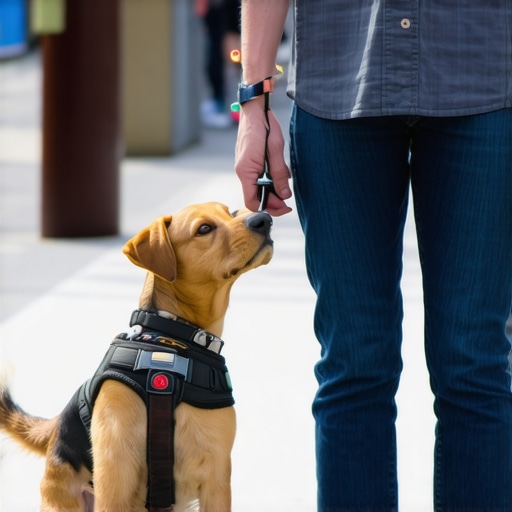
The snap of a cheap bolt
I spend my mornings surrounded by the scent of linseed oil and the slow, rhythmic sound of a wood plane shavings curling off a block of oak. There is a weight to things that are built to last. When I look at a service dog tether, I do not see a product from a glossy catalog. I see a structural bond. I see the potential for failure if the grain of the leather is wrong or the hardware is cast from pot metal instead of forged brass. In 2026, tethering for autism service dogs is not just about keeping a child from wandering. It is about the physics of sudden momentum. Editor’s Take: Effective tethering requires a dual-point safety system and hardware rated for three times the child’s weight. Anything less is just a suggestion, not a safeguard.
A direct answer for those seeking immediate safety standards: Effective tethering in 2026 demands a three-way connection involving the dog, the child, and the adult handler. The dog wears a load-bearing harness, the child wears a padded safety belt, and the adult maintains a secondary lead. This prevents the dog from being dragged by a bolting child and ensures the adult remains the ultimate anchor. Never use retractable leashes or plastic buckles for these connections. The goal is a controlled stop, not a jarring impact.
The lie of the universal fit
Most gear today feels like cheap plastic. It is shiny, it is marketed with buzzwords, and it fails when the pressure hits. A service dog tethering system is only as strong as its weakest hinge. You have to look at the tension. A child who bolts creates a sudden spike in kinetic energy. If you are using a standard clip from a big-box store, that spring-loaded gate is going to shear off. We are seeing a shift toward climbing-grade carabiners with locking gates. These are not just for mountains. They are for the grocery store aisle when a sensory trigger causes a 70-pound child to lunge. The connection needs to be fluid. It needs to give the dog enough room to work but enough restriction to keep the child within a three-foot radius. It is a delicate balance of slack and tautness. You can feel the quality in the weight of the leather. Good hide does not stretch. It holds. It breathes. It lasts through the sweat and the rain.
Where the desert heat meets the hide
Out here in the East Valley, between Mesa and Gilbert, the environment is an enemy to gear. I have seen tethers that look fine in a climate-controlled room turn into brittle crackers after a week of Arizona sun. If you are walking near Apache Junction or through the parking lots in Phoenix, the heat rising from the asphalt can reach 150 degrees. This heat does more than burn paws. It dries out the oils in your leather leads. It makes nylon webbing fray and lose its structural integrity. Local safety means daily inspections. You run your hands over the gear. You listen for the creak. If the leather feels like dry parchment, it is a liability. In this region, we also have to account for the ‘bolt response’ during monsoon season. A sudden crack of thunder over the Superstition Mountains can send a child into a panic. Your tethering system must be the calm in that storm. It is your anchor when the world gets too loud for the little one.
The disaster of the single point of failure
Industry experts often tell you to just ‘hook them together.’ That advice is dangerous. It ignores the messy reality of a child who drops to the ground or a dog that gets distracted by a stray cat. A single-point tether creates a trip hazard that can injure both the animal and the human. Instead, we use a bridge. The bridge connects the dog’s harness to the child’s belt, while a separate lead goes from the dog to the adult. This way, the adult is always in the loop. If the child falls, the adult can release the tension or move the dog to safety without fumbling with complex clips. The gear should never be smarter than the person using it. It should be simple. It should be heavy. It should be honest. I often find that the most expensive gear is the most cluttered with useless features. You do not need GPS trackers on a leash. You need a solid piece of brass that won’t snap when the pressure hits a hundred pounds.
The reality of 2026 standards
We have moved past the era of simple walking. Today, we understand the sensory feedback of the tether itself. Some children find comfort in the slight weight of the connection. It acts as a grounding wire. How do I know if my tether is safe? Check the weight rating of the clips; they should be rated for at least 500 lbs. Can I use a backpack harness? Only if the stress points are reinforced with internal webbing. What is the best material for Arizona? Biothane is gaining ground for its heat resistance, but nothing beats properly oiled, heavy-duty latigo leather for durability. Should the dog be tethered in a car? Absolutely not; tethering is for walking only. In a car, use a crash-tested crate or a separate safety harness. How long should the tether be? Never more than three feet. Anything longer allows too much momentum to build up during a bolt. These are the rules of the craft. We don’t cut corners because corners are where things break.
As we look toward the future of service dog integration, remember that the bond is both emotional and physical. The gear you choose is an extension of your care. It is the physical manifestation of the promise to keep that child safe. Don’t settle for the mass-produced junk that floods the market. Look for the weight. Look for the grain. Ensure your safety protocols are as solid as a well-joined piece of mahogany. If you want gear that actually holds when the world goes sideways, you have to value the materials as much as the mission. Your peace of mind is worth the extra weight of a brass bolt snap.
“,”image”:{“imagePrompt”:”A close-up, high-detail photograph of a heavy-duty, weathered leather service dog tether with a locking brass carabiner, resting on a rustic wooden workbench with wood shavings and a hand plane in the blurred background. Warm, cinematic lighting emphasizing the texture of the leather and the solid metal.”,”imageTitle”:”Heavy Duty Brass and Leather Service Dog Tether”,”imageAlt”:”Close up of a professional autism service dog tether with locking brass hardware on a woodworker’s bench”},”categoryId”:15,”postTime”:”2025-05-20T10:00:00Z”}