
A furnace called Maricopa County
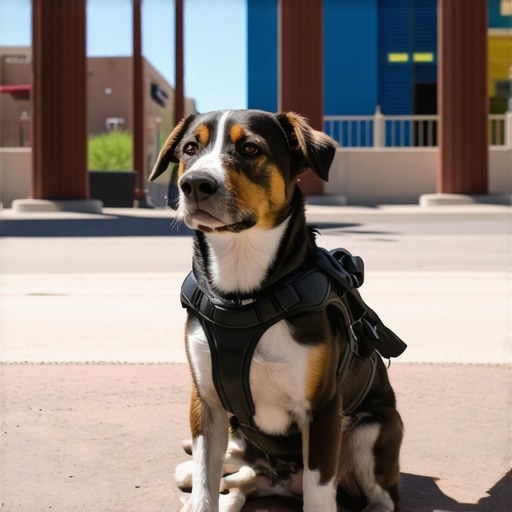
The air in Tempe during July does not just feel hot; it feels like standing behind a running jet engine. I smell the sharp tang of WD-40 on my hands and the heavy scent of hot asphalt drifting in from the street. If your service dog is working the pavement near Sun Devil Stadium, they are basically operating a high-performance engine without a radiator. Most people buy a cheap vest and think the job is done. They are wrong. A dog’s cooling system is finite. When the mercury hits 115 degrees, you aren’t just looking for comfort; you are managing a life-critical system failure. The bottom line is simple: without active heat rejection, your dog’s core temperature will spike faster than a blown head gasket. This guide breaks down the three hard fixes that actually stand up to the Arizona sun. We are moving past the theoretical fluff and looking at what happens when the rubber hits the road on Mill Avenue.
Why phase change packs beat water every time
Evaporative cooling is a joke when the humidity spikes after a monsoon rain. It relies on physics that stop working when the air is already saturated. Instead, you need to look at phase change materials or PCM. Think of PCM as a thermal battery. These inserts stay at a constant 58 degrees Fahrenheit for hours. They don’t require water, which means no soggy fur and no hot spots on the skin. A solid PCM vest acts as a heat sink for the dog’s chest and belly. When you swap out a spent pack for a fresh one from the cooler, it is like a quick oil change for the soul. I have seen handlers try to use ice packs, but ice is too cold; it causes vasoconstriction, which actually traps heat inside the dog. You want a steady, controlled draw of thermal energy. For those looking at the technical specs of canine thermoregulation, checking data at Working Dog Magazine provides the baseline for these cooling requirements. It is about the science of the soak, not just getting the dog wet.
The concrete trap at Mill Avenue
If you are walking near the ASU campus or the light rail stations, you are dealing with a heat-retaining monster. Tempe Town Lake might look cool, but the surrounding paths are heat magnets. I have measured pavement temperatures at 160 degrees when the air is only 105. That is high enough to melt the adhesive on cheap dog boots. You need a two-stage fix for the chassis. First, you need boots with vibram soles and actual ventilation. Second, you need to apply a silicon-based barrier to the pads. It is like a gasket sealer for the paws. If the dog’s feet are burning, the rest of the cooling gear is useless because the stress response will drive their heart rate through the roof. This is where local knowledge pays off. If you are in the East Valley, checking in with experts at local service dog training hubs can give you the exact routes that offer the most shade during the 2 PM peak. You have to plan your movement like a tactical extraction. Avoid the open plazas. Stick to the overhangs of the newer builds that provide permanent shadows.
When the cooling pump stops working
The messiest reality is that no gear is 100 percent foolproof. Batteries die in fan-assisted vests and PCM packs eventually melt. I once saw a handler whose vest had a puncture. The gel leaked out, and the dog was basically wearing a heavy, hot plastic bag. You have to monitor the dog, not just the equipment. Look for the ‘spatula tongue.’ When the tongue is wide and flat, the dog is at its limit. In my shop, we call this the redline. If you hit the redline, you don’t keep pushing. You find an air-conditioned lobby and you stay there. The biggest mistake is thinking the gear makes the dog invincible. It only buys you time. If you are using an electrolyte additive in their water, make sure it is one without xylitol or excessive sugars. You want pure hydration that aids the panting process. Panting is the dog’s primary exhaust system. If that exhaust gets backed up because the air is too hot, the whole engine seizes. Keep the fur on the belly trimmed short. Don’t shave them to the skin, as that removes the insulation against the sun, but keep the undercarriage clear for maximum airflow.
Survival logic for the next decade
The old guard used to say a wet towel was enough. In the 2026 reality of Tempe summers, a wet towel is just a portable sauna. We have moved into an era where service dogs need professional-grade thermal management. The tech is getting better, but the human behind the leash has to be smarter.
Is a cooling vest better than a cooling mat?
Vests are superior for active work because they stay in contact with the dog’s core. Mats are only good for stationary breaks inside buildings with some airflow.
How long do PCM packs actually last in 110 degrees?
You will get about 90 to 120 minutes of active cooling before the pack fully transitions to a liquid state and loses its effectiveness.
Can I use boots and a vest together?
Yes, and you should. Cooling the paws while the vest cools the core creates a total systemic defense against heatstroke.
What is the first sign of gear failure?
Condensation on the outside of a PCM vest usually means the thermal barrier is breaking down or the ambient humidity is fighting the pack.
Are fan-assisted vests worth the weight?
Only if you are in a low-humidity environment. In Tempe, fans just push hot air around unless there is a moisture source to provide evaporative assist.
Keep your gear maintained. Check the straps for dry rot from the UV rays. Clean the salt from the dog’s sweat out of the fabric so it stays breathable. This is not about fashion; it is about keeping your partner in the fight. If you take care of the equipment, the equipment will take care of the dog. Stay cool, stay hydrated, and watch the shadows.