
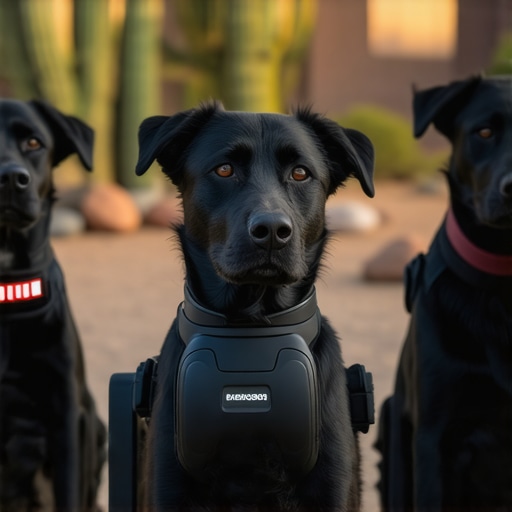
3 Fast Seizure Response Dogs Arizona Scent Fixes for 2026
The air in the Sonoran Desert has a way of thickening just before the monsoon hits, but for someone living with epilepsy, the thickening is often internal. It starts with a metallic tang on the back of the tongue. Then, the world tilts. I remember sitting on a porch in Scottsdale when a client’s Labrador, Maya, didn’t just nudge her; she leaned her entire weight into the woman’s shins. Five minutes later, the seizure arrived. That wasn’t luck. That was chemistry. Editor’s Take: Finding a seizure response dog in Arizona requires moving beyond basic obedience to high-fidelity scent detection that survives 110-degree heat.
When we talk about the scent of a seizure, we are talking about Volatile Organic Compounds or VOCs. These aren’t just smells; they are biological markers. Humans emit a specific chemical signature during a pre-ictal state. Dogs don’t just ‘know’ you’re sick. They smell a shift in your breath and sweat. In the psychology of this partnership, the dog becomes a mirror. If the dog is anxious, the owner gets anxious. For 2026, the focus has shifted from reactive barking to subtle, proactive pressure. It’s a quiet language. What the dog smells, and what the owner feels, are often worlds apart, yet they must align for the alert to work. This isn’t about a pet. It’s about a living, breathing early-warning system that operates on a molecular level. It’s the difference between a fall in the kitchen and a safe transition to the floor.
Training in the Southwest presents a unique set of hurdles. High heat destroys scent samples. If you are using cotton swabs stored in a freezer, they lose their potency the moment you step into the Phoenix sun. I’ve seen teams struggle because their training samples were contaminated by the smell of the plastic bags they were stored in. This is the messy reality. You spend months on scent work, only to find the dog is actually alerting to the scent of your laundry detergent because that was on your shirt during every session. To fix this for 2026, we are moving toward glass-vial isolation and synthetic pheromone stabilizing agents. It’s gritty work. You will fail. Your dog will get distracted by a lizard. But then, one day, they catch that specific ‘sweet-sour’ scent on your skin, and they don’t leave your side. That’s the win.
When the Breath Betrays
Old school methods relied on the dog seeing a seizure and then acting. That’s too late. Modern Arizona scent fixes involve ‘Rapid Scent Capture’ where the dog is rewarded for identifying the change in breath before any physical symptoms manifest. We are seeing a move away from the traditional ‘bark and circle’ to ‘touch and stay’. According to research on canine scent detection of human diseases, the accuracy of these animals can rival laboratory equipment when the bond is right. Expectation often hits a wall when owners realize a dog isn’t a machine. It’s a 24/7 commitment to maintaining that scent-trigger loop. You have to be as consistent as the dog. If you don’t reward the subtle nudge, the dog stops nudging. Simple as that.
Why the First Sample Fails
People often ask if any dog can do this. The answer is no. You need a dog with high ‘biddability’ and a deep nose. In 2026, we are looking at specific scent fixes like ‘Phase-Shift Training’—acclimating the dog to your scent in various environments, from a noisy Tempe coffee shop to the silence of your bedroom. The environment changes the scent profile. Humidity changes it. Your dog needs to recognize your pre-seizure chemistry even when you’re wearing heavy sunscreen or standing near a grill. It’s about isolation. We use ‘Scent Fixes’—small adjustments to the reward schedule—to ensure the dog doesn’t get burned out by the Arizona sun. A dehydrated dog can’t smell. A stressed dog won’t alert. We have to prioritize the animal’s biology as much as the owner’s safety.
The Elephant in the Room
Is a service dog right for you? It’s a heavy question. It’s not just a medical tool; it’s a lifestyle shift. You will be looked at in grocery stores. You will have to defend your rights. But for those who have found their match, the freedom is incomparable. These 2026 scent fixes—glass-stored samples, biometric-synced alerts, and heat-resistant training protocols—are changing the game for Arizonans. If you’re looking for a Service Dog in Mesa or considering Life with a Medical Alert Animal, the journey starts with the nose. Check out the latest Seizure Response Training techniques to stay ahead of the curve.
Common Questions About Scent Alerts
How long does scent training take? Usually, 6 to 18 months of consistent daily work. Can I train my own dog? Possible, but extremely difficult without a mentor. What is the best breed? Labs and Goldens remain kings, but Poodles are gaining ground for those with allergies. This isn’t a quick fix. It’s a marathon. What matters is the trust. When that dog looks at you and says, without words, that something is wrong—you listen. That’s the bond. That’s the fix. Reach out to a local specialist to start your scent-work journey today.