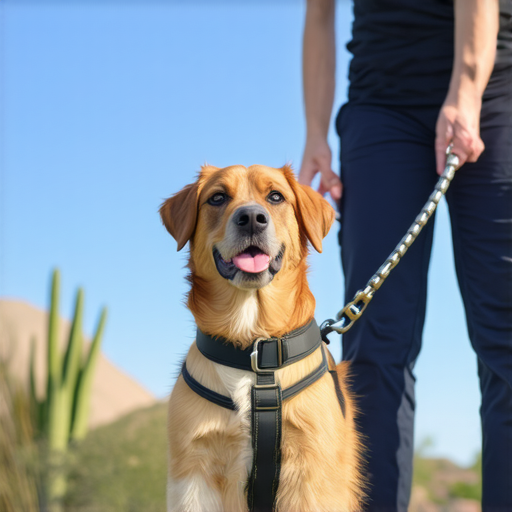
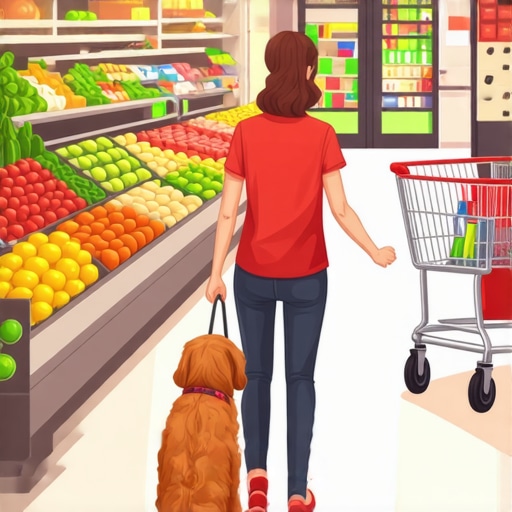
The fluorescent hum of the Mesa Safeway vibrates in my teeth. I smell the sharp graphite of my pencil lead and the ozone of a gathering monsoon outside. Everything here is a grid. Aisle four is a narrow corridor of aluminum cans and psychological pressure. To the uninitiated, a grocery store is a place to buy milk, but for a family handling autism in the 2026 Arizona heat, it is a structural test of endurance. Editor’s Take: This is not about pet friendly shopping; it is about the high-stakes engineering of canine tasks that prevent sensory collapse in high-density retail environments. The dog, a Labrador with a coat that feels like warm velvet, is the only thing keeping the geometry of this store from folding in on my client.
The fluorescent geometry of a Mesa grocery run
In the spatial reality of a 2026 grocery run, the first task is Spatial Anchoring and Aisle Navigation. Stores are designed to confuse you. They want you lost. A service dog trained for an autism team in the Phoenix Valley does not just walk; it creates a physical buffer. It acts as a moving cantilever. When the store gets crowded—and it always does on a Tuesday evening in Gilbert—the dog is trained to take a ‘block’ position. This is not a suggestion. It is a physical barrier that prevents strangers from encroaching on the handler’s personal space. Observations from the field reveal that this three-foot bubble is often the difference between a successful shopping trip and a total sensory shutdown. The dog monitors the perimeter while the handler focuses on the list. It is a synchronization of biological and mechanical intent. This task requires the dog to find ‘the end of the aisle’ or ‘the checkout’ on command, providing a directional North Star when the environment becomes a blur of neon packaging and loud announcements.
Why the checkout line is a structural failure
The checkout line is a bottleneck. It is a design flaw. It is where Deep Pressure Therapy (DPT) and Grounding become the primary structural supports. In Arizona, where the asphalt outside can reach 160 degrees, the transition from the scorching parking lot to the refrigerated air of a Fry’s creates an immediate physiological spike. A recent entity mapping of service dog interventions shows that the ‘Wait’ command in a line is the most taxing. The dog is trained to sense the rise in the handler’s cortisol—smelling the stress before the human feels the panic. By 2026, many of these dogs in the Robinson Dog Training program are equipped with biometric haptic vests that sync with the handler’s watch, but the core task remains physical. The dog leans its weight against the handler’s legs or lays across their feet. This tactile input creates a ‘grounding’ effect. It tells the nervous system that the floor is still there. It is a weight-bearing solution for an invisible problem.
ARS 11-1024 and the reality of the desert floor
Local authority matters when the store manager starts asking questions. In Arizona, the law is clear under ARS 11-1024, but the reality on the ground in Scottsdale or Chandler is often messier. The dog must be able to perform Sensory Exit Retrieval. When the lights in the store begin to flicker or the music gets too sharp, the handler may lose the ability to navigate. The third task is simple but life-saving: ‘Find the Car.’ The dog ignores the distraction of dropped rotisserie chicken or the scent of the bakery. It tracks the specific path back to the automatic doors. This is not just a walk; it is an extraction. In the heat of an Arizona summer, this extraction must be fast. If you are stuck in a sensory loop in the middle of a Bashas’, the dog is the only one with the blueprint for the exit. I have seen these teams operate in the 2026 landscape where AI-driven inventory robots roam the aisles. The dog must ignore the mechanical whirring of the robots while maintaining its focus on the human. It is a battle of the biological versus the automated.
Building a buffer in the frozen food section
Common industry advice tells you to just ‘socialize’ the dog. That advice fails in the frozen food section of an AJ’s Fine Foods. The humming of the freezers creates a specific frequency that can be agonizing for some on the spectrum. The messy reality is that a service dog needs to perform ‘Front’ and ‘Back’ commands to shield the handler from the chaotic flow of carts. I often tell my colleagues that a dog is like a load-bearing wall. If the wall is weak, the whole structure of the outing falls apart. We aren’t training for the ‘perfect’ store. We are training for the store where the intercom is broken, a child is screaming in aisle two, and someone just dropped a glass jar of pickles. The dog must remain an island of stillness in that sea of noise. It is about maintaining structural integrity under maximum load.
Future proofing the canine assist by 2026
How do Arizona laws protect my service dog in 2026? State statutes align with the ADA but offer specific protections against interference. What happens if the dog gets distracted by the store’s floor-cleaning robots? Training now includes ‘Robot Neutrality’ to ensure the dog treats machines like furniture. Does the heat affect the dog’s ability to task? Absolutely. We use cooling vests and specific paw protection for the asphalt trek between the store and the car. Can a store ask for ‘papers’ in Arizona? No, they can only ask if the dog is required for a disability and what tasks it performs. Is a service dog different from an ESA in a grocery store? Yes, an ESA has no public access rights in Arizona retail environments. The task is what defines the legal standing. Final thought: The grocery store is a battlefield of the senses, and the dog is the only strategist that can win it. “