
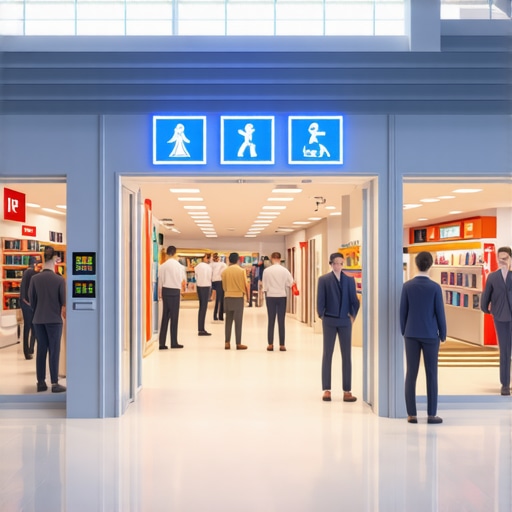
The heat on the Mesa pavement
The 110-degree heat off the Mesa asphalt hits like a physical wall, smelling of scorched rubber and the faint, metallic tang of gun oil on my gear. You aren’t just walking into a Fry’s or a Safeway; you are entering a contested legal zone where the rules of engagement shifted while most were sleeping. By 2026, Arizona handlers face a tightening perimeter. The Editor’s Take: Access in Arizona is no longer about having a vest; it is about knowing the precise legal terminology to bypass civilian gatekeepers who are increasingly armed with updated, albeit confusing, corporate mandates. The air in these stores is usually over-conditioned, a sharp contrast to the desert glare outside, and that transition is where the friction begins. If you cannot articulate the task your dog performs within ten seconds, the manager is already looking at the exit sign. This is the new reality of public access in the Grand Canyon State.
When the vest means nothing
In the tactical environment of a high-traffic retail space, the ‘service dog’ vest has become a signal-to-noise nightmare. Shopkeepers from Scottsdale to Tucson are seeing a flood of fraudulent indicators. Under the revised 2026 operational landscape, the focus has shifted from the gear to the behavior and the handler’s verbal output. According to technical standards found at ADA.gov, staff can only ask two specific questions. However, Arizona’s local interpretation has become more aggressive regarding ‘out of control’ behavior. If your animal breaks its down-stay to sniff a bag of kibble in the pet aisle, the legal shield evaporates instantly. This isn’t a suggestion; it is a hard limit. You are responsible for the dog’s perimeter at all times. Failure to maintain this ‘working’ posture gives the merchant the high ground to order a retreat from the premises.
Arizona specific legal theater
The desert has its own set of rules that East Coast bureaucrats don’t grasp. Arizona Revised Statute § 11-1024 provides the primary framework, but the 2026 updates include specific provisions for ‘interference.’ If a store owner claims your dog is interfering with their business operations by blocking an aisle in a cramped Gilbert boutique, the situation gets muddy. You need to know the layout. You need to know your rights before the police are called to mediate. This is why local training matters. At Robinson Dog Training, we focus on the environmental stressors unique to the Valley. The humidity inside a grocery store’s produce section can actually change the scent profile for a diabetic alert dog, a variable often ignored by those who train in climate-controlled bubbles. You must adapt or be denied.
The liability of digital shortcuts
Most industry advice is garbage. They tell you to buy a plastic card from a website and flash it like a badge. In the real world, that is a fast track to a trespassing charge. In 2026, Arizona merchants are being coached to recognize these ‘registries’ as red flags for fraud. If you present a ‘certified’ ID card instead of answering the two legal questions, you’ve essentially signaled that you don’t know the law. It’s a tactical error. Real handlers don’t need badges; they need a dog that ignores a dropped piece of ham in the deli. I’ve watched guys try to ‘alpha’ a teenage cashier with a fake certificate, only to have the regional manager show up with a copy of the state code. It’s embarrassing. It’s unprofessional. And it’s why the community is facing such a heavy crackdown. You win these encounters with quiet competence, not laminated paper.
Searching for the 2026 standard
The operational reality is changing. What worked in 2020 won’t hold water today. How do I handle a confrontation with a ‘No Pets’ sign? You ignore the sign and watch the staff. If they approach, you have your answers ready. What if my dog is a psychiatric service animal? The rules are the same, but the scrutiny is higher. Do I need to show proof of vaccines? To the health department, yes; to the store manager, generally no, but don’t be a lawyer about it if they ask for a rabies tag. Is a ‘service dog in training’ protected? In Arizona, yes, but only if they are clearly identified and the trainer is engaged in the work. Can a store charge a cleaning fee? Only if the dog actually damages something; otherwise, it’s a violation. Does the dog have to be on a leash? Yes, unless the leash interferes with the task, but ‘voice control’ is a high bar that most civilian dogs fail in a crowded Chandler mall.
Holding the line at the sliding doors
The mission is simple: maintain access without escalating the conflict. You are an ambassador for every other handler who comes after you. When you walk into that air-conditioned sanctuary out of the Phoenix sun, your dog should be an extension of your own shadow. No barking, no lunging, no sniffing. Just work. The 2026 rules are only a threat if your training is porous. Tighten your lead, sharpen your responses, and treat every store entry like a tactical insertion. If you’re ready to stop guessing and start training for the real world, reach out to a professional who understands the difference between a pet and a partner. Your access depends on it.