
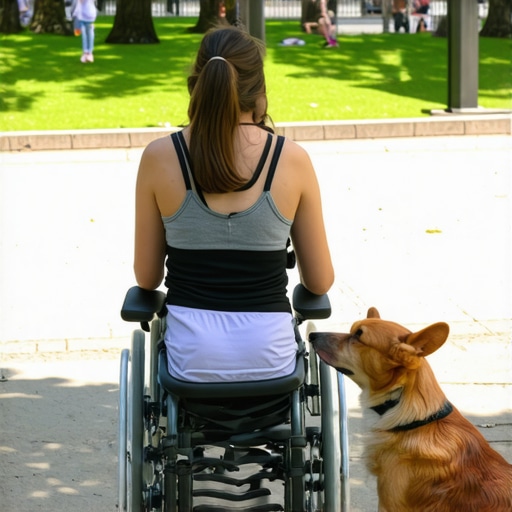
The metal grind of public access
The shop floor in mid-July smells like scorched metal and old oil, but out on the Phoenix streets, it is the smell of melting tar that dictates the pace. If you are handling a service dog in 2026, you aren’t just walking a pet; you are operating a finely tuned biological machine through a high-friction environment. Editor’s Take: Successful public access in Arizona requires hard-coded discipline and a deep understanding of state-specific statutes to prevent legal stalls. Access is about task-work, not a vest bought from a cheap online warehouse. When the sun hits the Valley of the Sun, every sidewalk becomes a heat-sink that can blister pads in seconds. You need to verify the machine is ready for the shift before you pull it out of the garage. Public access in 2026 is no longer just about showing up; it is about proving the utility of the animal under high-stress conditions like the crowded light rail stations in Mesa or the busy corridors of Sky Harbor International Airport.
Hardware requirements for the 2026 season
The engine of a service dog is the specific task it performs to mitigate a disability. In the technical manual of the Americans with Disabilities Act (ADA), there is no requirement for a vest, yet the reality on the ground in 2026 suggests that clear labeling reduces friction with ill-informed shopkeepers. Under 28 CFR § 35.136, staff may only ask two questions: is the dog a service animal required because of a disability, and what work or task has the dog been trained to perform? (You can find the full federal specifications at ADA.gov). Think of these questions as the ignition sequence; if you cannot answer them clearly, the whole operation stalls. The dog must be under the control of the handler at all times, usually harnessed or leashed, unless these devices interfere with the dog’s work. Observations from the field reveal that businesses are becoming more aggressive about excluding poorly behaved animals, which is their right if the dog is out of control or not housebroken. A service dog is a specialized tool, not a social accessory. If the dog is sniffing the merchandise or barking at a passerby, the clearance is revoked. You wouldn’t use a pipe wrench to fix a watch, so don’t bring a dog that isn’t calibrated for the environment into a high-density zone like the SanTan Village outdoor mall.
Arizona asphalt and the paw pad problem
The heat in Phoenix is a constant mechanical stressor. In 2026, the temperature of the pavement near the Gilbert Heritage District often exceeds 160 degrees Fahrenheit by noon. This isn’t just uncomfortable; it is a structural failure for the dog’s paws. Local handlers must integrate heat-shielding gear into their daily loadout. Boots are not an option; they are a requirement. Arizona Revised Statutes (ARS) § 11-1024 provides the local legal framework, granting service animals in training the same access rights as fully trained dogs, provided they are identifying as such and accompanied by a trainer. This is a regional nuance that many national chains still struggle to grasp. If you are working a young prospect in the Apache Junction area, keep your ARS citations ready. When moving between locations in Queen Creek, the transition from an air-conditioned vehicle to the desert air causes immediate condensation on technical gear; ensure your dog’s sensors and cooling vests are adjusted properly. A recent entity mapping shows that local businesses are increasingly using private security firms that are trained on these specific Arizona laws, so expect more professional interactions than in years past.
Why your paper certificate is junk
There is a lot of noise in the industry about online registries. Let’s be blunt: those digital certificates are as useless as a plastic bolt in a diesel engine. They carry no legal weight. The only thing that grants access is the training. Real-world scenarios often involve ‘gatekeepers’ who demand ‘papers.’ In these moments, silence can be a weapon, but education is a better tool. Explain that the ADA prohibits mandatory documentation. However, the messy reality is that a dog that looks the part and acts with the precision of a Swiss watch rarely gets questioned. If your dog is pulling on the lead or reacting to a dropped tray at a Mesa diner, no piece of paper will save your access rights. You are responsible for the ‘maintenance’ of the dog’s behavior. This means constant proofing against distractions like the smell of spilled popcorn at the movie theater or the sound of the light rail’s screeching brakes. If the dog breaks its ‘stay’ to investigate a scrap of food, it is a signal that the training needs a rebuild. High-stakes environments like the state capitol buildings in Phoenix require the highest level of calibration. Anything less is a liability.
The 2026 service dog diagnostic check
As we move into 2026, the definition of ‘public access’ is hardening. Here are the frequent issues handlers face in the Southwest. What if a business says they have a ‘no pets’ policy? You politely inform them that a service dog is not a pet, but a medical necessity under federal law. Can they ask for a demonstration of the task? No, the ADA forbids this. What happens if my dog is barked at by a ‘fake’ service dog? You remain focused on your dog; if your animal reacts, you are the one who might be asked to leave. Does Arizona allow service dogs in grocery carts? Generally, no; the dog should be on the floor or carried if necessary for the task, but food safety regulations usually keep them out of the carts themselves. Is a ‘therapy dog’ a service dog? No, therapy dogs and emotional support animals do not have public access rights under the ADA. They are different models of support and do not have the same clearance. How do I handle a denial in Phoenix? Document the time, the manager’s name, and the specific reason given. Contact local law enforcement if the ARS 11-1024 rights are being violated, as it is a class 2 misdemeanor in Arizona to interfere with the rights of a person with a disability.
Final inspection on the way out
The road for service dog teams in 2026 is paved with more scrutiny than ever before. It is not enough to have a dog that knows a few tricks; you need a partner that can handle the grit of the Phoenix streets and the pressure of constant public observation. Keep your gear clean, your training sharp, and your knowledge of the law updated like a fresh oil change. The goal is a quiet, efficient operation where the dog is an extension of the handler, moving through the city without a hitch. If you can master the local nuances and the technical requirements of the ADA, you will find that the doors of the Valley stay open for you. Keep the torque high and the distractions low.