
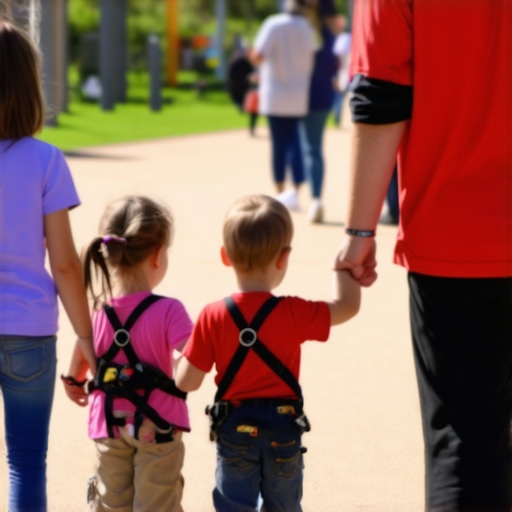
The smell of starch on a crisp uniform and the metallic tang of dry heat hitting the pavement in Mesa define the morning. If you think a standard leash is a safety strategy for a child who bolts, you have already lost the perimeter. In the tactical reality of 2026, autism tether training is not a suggestion; it is a structural necessity for navigating the sprawling, often chaotic Maricopa County park system. This is about establishing a fail-safe when the sensory environment reaches a breaking point.
p>Editor’s Take: Tethering provides a physical anchor that prevents elopement before the flight response fully engages. It is a secondary safety layer designed for high-stakes public environments where split-second lapses lead to tragedy.
The mechanics of the secondary anchor
A tether is a bridge between two entities, but if that bridge is built on cheap nylon, it will collapse under tension. Tactical-grade harnesses must distribute force across the dog’s chest and the child’s torso to prevent whiplash. We look for hardware that handles sudden kinetic energy without failure. When we talk about service dog training, we are talking about more than just obedience; we are talking about weight-rated carabiners and reinforced stitching that can withstand a high-velocity bolt. Observations from the field reveal that many parents rely on ‘fashion’ harnesses that snap under the pressure of a twenty-pound child’s momentum. You need a system that functions like a mountain climber’s belay, not a laundry line. External research from organizations like Autism Speaks emphasizes that elopement is often a response to sensory overwhelm, making the physical reliability of the gear your last line of defense.
Arizona sun and the hardware problem
In the Sonoran Desert, gear fails because of the environment as much as the movement. By 2026, Arizona park regulations have tightened around professional safety equipment, especially in high-traffic zones like Papago Park or the Usery Mountain Regional Park. The heat here isn’t just a nuisance; it’s a corrosive force. Metal clips get hot enough to burn skin, and plastic buckles become brittle after six months of UV exposure. Tactical safety requires a monthly gear audit. If you are hiking the Wind Cave Trail, you aren’t just managing a child; you are managing a life-support system in a landscape that offers no shade and plenty of sharp edges. This is why we insist on heat-shielded webbing.
When the crowd becomes a hostile environment
Most experts tell you to ‘stay calm.’ I tell you to stay alert. A crowded park at the Gilbert Riparian Preserve is a tactical nightmare for a child with autism. The sensory noise acts like a jammer on their internal compass. The mess happens when the handler loses focus for three seconds to check a phone or grab a water bottle. In those three seconds, a child can hit the end of a tether with enough force to pull a dog off balance if the dog hasn’t been trained for ‘anchor stability.’ Common advice fails because it assumes the dog will naturally know to dig in. It doesn’t. The dog must be taught to drop its center of gravity the moment the line goes taut. This is the difference between a controlled stop and a chaotic pile-up on the asphalt.
The reality of 2026 safety protocols
The old ways of just ‘holding a hand’ are outdated in the face of modern park density. We have moved toward a philosophy of redundant safety. Here are the five rules you must deploy. One, the 10-foot rule: never use a tether longer than ten feet in a public park to maintain control of the radius. Two, the double-point attachment: tether to the dog’s harness, not the collar, to protect the airway. Three, the thermal check: touch the tether hardware every twenty minutes to ensure it isn’t heating up. Four, the secondary egress plan: always know where the nearest quiet zone or ‘cool down’ area is located in the park. Five, the handler’s stance: never stand with locked knees when the child is at the end of the line.
What happens if the dog gets distracted by a squirrel?
A properly trained safety dog ignores environmental triggers because the ‘job’ of anchoring is reinforced as a higher-value task than the ‘prey’ drive.
Can a tether be used for an adult with autism?
Yes, but the dog must be a large-breed animal with specific weight-bearing training to ensure the anchor is effective against adult momentum.
Does Arizona law require a permit for tethering in parks?
While a permit isn’t required, many regional parks now request that service animals be clearly identified to avoid confusion with standard pets on leashes.
How do I handle public judgment about tethering?
The mission is safety, not PR. A child who is securely tethered is a child who is not drowning in a park lake or running into Mesa traffic.
Is tethering legal under the ADA?
The ADA allows for various forms of control; if the tether is part of a service dog’s task to mitigate a disability, it is a protected tool.
The mission ahead
Safety is a constant state of vigilance, not a one-time purchase. As we look toward the 2026 season, the parks will only get more crowded and the Arizona sun will only get more intense. Build your safety protocols now. Train your anchor. Secure your perimeter. Your child’s freedom to explore the world depends entirely on the strength of the bond, and the gear, that holds them back from the edge.