
The shadow in the back row
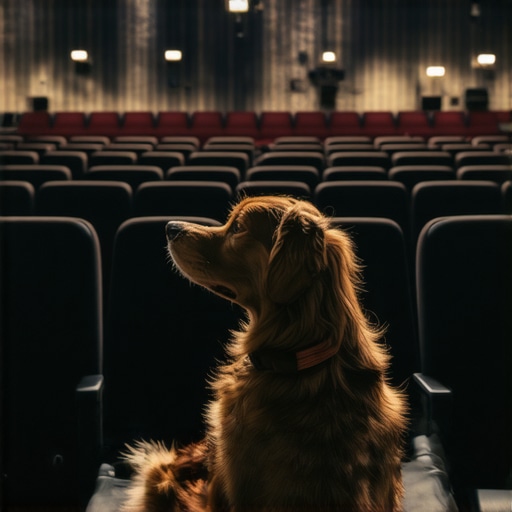
The smell of industrial lemon ammonia and the hum of a dying projector lamp define my world after midnight. As a night-shift guard, I watch the empty seats of the Mesa Grand long after the blockbusters stop screaming. For a veteran or a survivor with PTSD, a movie theater is not a place of relaxation; it is a tactical nightmare of unmonitored exits and encroaching shadows. Blocking tasks are the specific trained behaviors where a service dog uses its body to create a physical buffer, effectively preventing strangers from entering the handler’s personal space and triggering a startle response. Editor’s Take: Effective blocking is the difference between a successful outing and a sensory meltdown in the high-density theater environments of 2026. This is not about comfort; it is about functional access to public spaces. It is quiet now, but during the 7 PM rush, the air is thick with the scent of synthetic butter and the frantic energy of a thousand people. A dog performing a ‘cover’ or ‘block’ acts as a biological shield. They do not growl. They do not bite. They simply exist in the space that a distracted teenager or a hurried usher might otherwise occupy. In the silence of the lobby, I see the scuff marks on the floor where these dogs stand their ground. It is a quiet war against the intrusion of the world.
The physics of the physical buffer
Service dogs utilize four primary maneuvers to mitigate hypervigilance in theaters: the ‘Front’ block, the ‘Back’ cover, the ‘Side’ shield, and the ‘Orbit’ rotation. These tasks are mechanical responses to the handler’s increasing cortisol levels or specific verbal cues. When a dog sits behind a handler in a ticket line, they are effectively watching the six, allowing the human to focus on the transaction without the constant need to look over their shoulder. The ‘Front’ block is equally vital when seated in those narrow 2026 luxury loungers. The dog tucks into the footwell or across the lap area, creating a boundary that keeps the person in the next seat from accidentally bumping the handler’s knees or reaching over for a dropped napkin. These are not ‘tricks’ found in a standard obedience manual. They are calibrated responses to the geometry of modern architecture. A ‘Side’ shield is used when walking through the narrow corridors leading to the restrooms, where the dog walks slightly offset to the handler to keep a distance from the wall or passing crowds. Unlike the ‘natural’ behavior of a pet, these movements are rigid and intentional. They require the dog to be indifferent to the smell of dropped popcorn or the high-frequency whine of the theater’s sound system.
The Mesa corridor and the law of the desert
In the Phoenix-Mesa metropolitan area, the heat isn’t the only thing that’s oppressive; the density of local shopping centers like those near the 60 freeway makes public access a constant challenge for service dog teams. Arizona’s Title 11-1024 provides clear protections for these animals, yet many local theater managers still operate under a cloud of confusion. I’ve seen it happen. An usher gets nervous because a dog is ‘blocking’ the path of a cleaning crew. But the law is clear: if the dog is performing a task to mitigate a disability, they are protected. The specific geography of our local theaters, often built with steep stadium seating and narrow egress points, makes these blocking tasks more difficult than they would be in a flat-floor environment like a grocery store. When the monsoon rains hit the asphalt outside, everyone crowds into the lobby at once. That is when the ‘Orbit’ task becomes the primary tool for survival. The dog circles the handler to keep a clear three-foot radius. It looks like a dance, but it is actually a defensive perimeter. Regional trainers in the East Valley emphasize that these dogs must be proofed against the specific sounds of a Desert Ridge or Gilbert movie house—the booming bass of an IMAX screen and the sudden brightness of the lobby lights.
The friction of the reclining seat
The biggest lie in the cinema industry is that ‘luxury seating’ improves the experience for everyone. For the service dog handler, the 2026 trend of massive, motorized recliners is a logistical disaster. Theater staff often claim these seats provide more room, but the reality is they eat up the floor space where a dog is supposed to perform a ‘Back’ cover. When the seat reclines, the mechanism can actually be dangerous for a dog’s tail or paws. The messiness of this reality means that blocking tasks have had to evolve. A dog can no longer just sit behind the chair; they must learn to tuck under the footrest or occupy the sliver of space between the armrest and the aisle. Most industry advice fails because it assumes a static environment. In practice, a theater is a shifting puzzle of moving parts, spilled soda, and people who don’t look where they are walking. If a dog is pushed out of its blocking position, the handler’s hypervigilance spikes. It’s not just an inconvenience; it’s a failure of the assistive technology. We need to stop pretending that accessibility is a one-size-fits-all checklist. It is a constant negotiation between the canine’s training and the architect’s lack of foresight.
Why the old guard training methods are failing
By 2026, the intensity of public spaces has reached a point where basic ‘sit and stay’ training is useless. The old guard of trainers focused on stationary behavior, but the modern movie theater requires dynamic blocking. This involves the dog anticipating a crowd’s movement before it happens. Are people rising for the credits? The dog should automatically shift to a ‘Front’ block to allow the handler time to gather their belongings.
What if the theater is too crowded for a block?
In extreme density, the dog must perform a ‘Deep Pressure Therapy’ (DPT) task instead, lying across the handler’s lap to ground them when physical space for a block is unavailable.
Is blocking considered aggressive behavior?
No. A block is a passive stance. The dog’s head is usually down or neutral, and there is no vocalization. If the dog is growling, it is not a block; it is an untrained animal.
How do I handle ushers who say the dog is a trip hazard?
Explain that the dog is performing a required task under the ADA. The dog should be tucked as tightly as possible while still maintaining the buffer.
Do small dogs perform blocking tasks?
While a Great Dane provides a more substantial physical barrier, even a small terrier can perform a ‘Front’ block by occupying the space directly at the handler’s feet, serving as a visual reminder for others to keep back.
Can blocking be used in the concessions line?
Yes, this is where the ‘Back’ cover is most effective to prevent ‘tailgating’ in line.
How does a dog handle the loud noises of an action film while blocking?
Desensitization training involves playing cinematic audio at high volumes during task practice. A dog that flinches cannot block effectively.
The final frame
The lights are coming up, and the floor is a sticky mess of wasted potential. As the world moves toward more immersive and crowded entertainment, the role of the PTSD service dog becomes more about space management than anything else. Blocking is the silent language of safety. It is the tactical placement of a living creature to ensure a human can watch a two-hour film without feeling hunted. The future of service dog work isn’t in more complex commands, but in better environmental awareness. We don’t need dogs that can fetch a beer; we need dogs that can hold a line in a crowded lobby while the world tries to push through. When I lock the doors of this theater, I think about the handlers who will be here tomorrow, relying on four paws to keep the walls from closing in. It’s a heavy burden for a dog, but for the person on the other end of the leash, it’s the only way to see the show.