
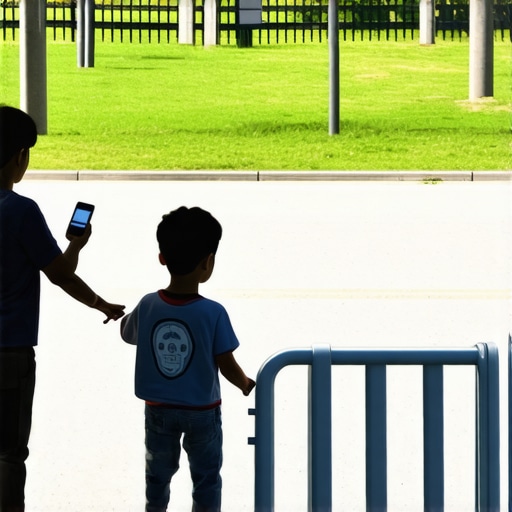
Editor’s Take: Effective wandering prevention requires a shift from passive observation to active perimeter defense. By 2026, safety relies on signal redundancy and verified physical barriers rather than a single digital point of failure.
The tactical silence of a 3 AM exit
I smell the sharp bite of gun oil and the stiff, dry scent of laundry starch on my uniform every morning. It reminds me that structure is the only thing standing between order and chaos. In my world, a breach is a failure of intelligence and logistics. When we talk about autism wandering, or elopement, we are talking about a tactical exit from a secure zone. The child is not just walking; they are moving with an objective that your current security profile failed to anticipate. 2026 brings new challenges. The digital noise is louder. The distractions are more frequent. To keep a runner safe, you must think like an ex-military strategist. You stop looking at the door as a piece of wood and start seeing it as the primary point of ingress and egress in a high-stakes environment. Silence is the enemy. When the house goes quiet at 3 AM, that is when the perimeter is most vulnerable. A child with autism does not announce their departure with a shout. They move with the ghost-like efficiency of a scout. If your security relies on your ears, you have already lost the flank.
Hardware that survives the actual field
Most civilian gear is garbage. It looks pretty on the shelf but fails the moment the heat rises or the battery drops to forty percent. For 2026 safety, you need hardware that survives the actual field of play. This means moving beyond standard Wi-Fi cameras that drop signal when the microwave runs. You need a dedicated RF-based alert system. Radio frequencies do not care if your internet router is rebooting. They penetrate walls. They provide a jagged, reliable pulse that tells you exactly when a latch has been moved. We are looking at four specific tasks here. First, hardening the physical locks. Traditional deadbolts are a joke to a determined mind. You need high-security cylinders that require a specific physical torque that a child cannot easily apply. Second, you must deploy signal redundancy. If your primary tracker uses GPS, your backup must use cellular or LoRaWAN technology. A single point of failure is a death sentence in tactical logistics. You do not go into a hot zone with one radio; you do not protect a child with one tracker. Check this resource for technical standards on safety and wandering prevention to see how the industry is trying to keep up. But remember, the industry is always two steps behind the reality on the ground.
Why the Sonoran desert ignores your GPS
In the East Valley, from the dusty edges of Mesa to the suburban grids of Gilbert and Queen Creek, the terrain is your greatest adversary. The Arizona sun eats batteries for breakfast. If you are relying on a tracker that overheats at 105 degrees, you are effectively blind. Local authority means knowing that a child heading north in Mesa might end up in the Salt River bed before your first app notification even pings. The heat in the 480 area code is not a suggestion; it is a hard limit on how long a human can survive without water. 2026 safety tasks require you to map your local area for what I call ‘Attraction Points.’ These are the spots where the kid will go first. Is it the neighbor’s pool in Chandler? Is it the retention basin that fills up after a monsoon? You need a pre-coordinated map shared with the Maricopa County Sheriff’s Office before the event occurs. Do not wait for the crisis to introduce yourself. Intelligence wins wars, and local intelligence saves lives. I often tell my teams that a map is only as good as the boots that have walked it. Go walk the three-block radius around your home. Find the holes in the fences. Find the unlocked gates. That is where the breach will happen.
The failure of the locked door theory
Standard industry advice says to lock your doors. That is amateur hour. A child who wants to elope will find the one window you forgot to dowel. They will find the dog door that is just wide enough for a slim body to squeeze through. This is what I call the ‘Messy Reality.’ Most parents are exhausted. They are running on four hours of sleep and cold coffee. In that state, you forget to set the alarm. That is why 2026 safety requires automation that does not rely on human memory. You need ‘Auto-Arming’ perimeters. When the sun goes down, the house should go into a lockdown state automatically. If a window opens, every light in the house should flash red. It needs to be a sensory event that shakes you out of your exhaustion. We also see a lot of failure in ‘Wearable Compliance.’ Parents buy these fancy watches, but the child hates the texture of the silicone strap and rips it off. If the gear is not on the body, it does not exist. You must find textile-integrated solutions. Think about GPS chips sewn into the lining of a favorite jacket or iron-on patches that house a micro-transmitter. If you are fighting the child’s sensory needs, you are fighting a losing battle. Adaptation is the only path to victory.
Tactical survival in the 2026 digital grid
The tech of 2026 is smarter but also more fragile. We have AI-driven cameras that claim to recognize when a child is leaving, but they struggle with shadows and low light. Your task is to stress-test these systems. Run a drill at midnight. See if the camera actually pings your phone. If it takes more than ten seconds for that notification to arrive, the system is a failure. You also need to look at the ‘Internal Perimeter.’ This is about securing the high-risk zones inside the house, like the kitchen with its heat sources or the bathroom with its water. A wandering event does not always lead outside; sometimes it leads to the stove. How do I prevent my child from wandering at night? Use a combination of floor pressure mats and door chimes that work on an independent battery circuit. What is the best tracker for 2026? Look for devices that offer ‘Dual-Sim’ capabilities and a battery life that exceeds 72 hours. Is a service dog better than a GPS? A dog provides an emotional tether and a biological tracking system that can follow a scent trail when technology fails. Should I notify my neighbors? Yes, but give them a specific protocol, not just a warning. Tell them to call you first and then the police. What about water safety? In areas like Mesa and Queen Creek, every pool must have a secondary fence. No exceptions. How do I stop a child from climbing fences? Use ‘Roll-Top’ fencing that provides no grip for small hands.
Holding the line for the long haul
You cannot stay in a state of high alert forever. Even the best soldiers need a rotation. But when it comes to your child, the duty never ends. This is about building a system that works when you are at your weakest. It is about logistics, redundancy, and a refusal to accept a single point of failure. The desert is unforgiving, and the city is fast. By hardening your perimeter and deploying the right 2026 tasks today, you ensure that a lapse in your attention does not become a tragedy on the evening news. Stay frosty. Watch the exits. Hold the line. Your mission is their safety, and in this house, we do not miss a single beat.