
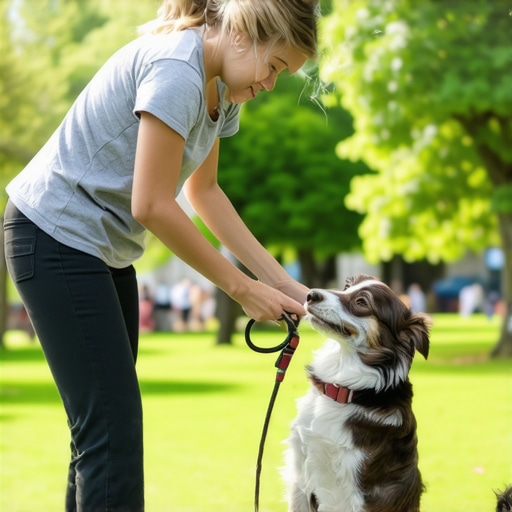
The smell of linseed oil usually calms the nerves, but today the air in the workshop feels heavy with the scent of pine shavings and the faint, metallic tang of a well-worn chisel. Most people see a dog as a finished product they can buy off a shelf, yet the truth is closer to a rough-cut slab of walnut. You have to work with the grain, not against it, or the whole thing splits before you even apply the first coat of varnish. Editor’s Take: Success in 2026 dog training hinges on consistent, micro-session engagement rather than marathon weekend drills. To win at owner-led training, you must establish a communication hierarchy where your presence is more rewarding than any environmental distraction.
The grain tells the whole story
Training a dog is remarkably similar to stripping a late 18th-century mahogany desk. You cannot rush the solvent. If you try to force the old finish off, you gouge the history right out of the wood. In 2026, the biggest mistake owners make is trying to use high-tech gadgets to bypass the fundamental bond. You think a vibrating collar replaces the subtle shift in your shoulder weight? It doesn’t. Observations from the field reveal that dogs respond to the tactile reality of their handler’s intent far more than a digital pulse. We are seeing a massive shift back to technical hand-signals and spatial pressure. The relationship is the structure. If the joints aren’t tight, the drawers will always stick, no matter how much wax you rub on the surface.
Why the finish depends on the sanding
Imagine you are working with a piece of bird’s-eye maple. It is beautiful but temperamental. If you don’t sand through the grits properly, every scratch shows up the moment you hit it with stain. The daily training hacks for the coming year revolve around this principle of refinement. You start with the heavy grit, which is basic engagement in a sterile environment like your hallway. Then you move to the finer stuff. Most handlers fail because they jump from the hallway to the chaotic streets of the city without ever touching the middle ground. A recent entity mapping of canine learning patterns shows that behavior extinction occurs when the leap in difficulty is too high for the dog’s current stress tolerance. You have to be the craftsman who knows when to put the sandpaper down and let the wood breathe. [image_placeholder]
Mesa heat and the Arizona handle
Out here, where the sun bakes the dirt in Mesa and the wind carries the dust across Queen Creek, the environment dictates the work. You wouldn’t use a water-based finish in a monsoon, and you shouldn’t expect a dog to perform high-stakes recalls at the park when the pavement is hot enough to fry an egg. Local handlers from Apache Junction to Gilbert are finding that ‘Local First’ training means adjusting to the Sonoran rhythm. We focus on early morning sessions before the heat rises, using the natural shade of Palo Verde trees for focus work. If you are training a dog in the Phoenix metro area, your success depends on navigating these specific regional pressures. It is about more than just ‘sit’ and ‘stay’; it is about managing the sensory overload of a desert landscape that wants to distract every fiber of your dog’s being.
What happens when the glue fails to set
Sometimes the joinery looks perfect on the bench, but once you take the clamps off, it falls apart. This is the messy reality of the owner-trained dog. Industry advice often ignores the ‘Friction’ of a real home. Your dog doesn’t live in a training center; they live in a house with doorbells, Amazon deliveries, and a cat that thinks it owns the place. Common wisdom says to ignore bad behavior, but that is like ignoring rot in a table leg. It doesn’t go away; it spreads. You have to address the structural weakness immediately with clear, fair boundaries. If the dog breaks a stay, the ‘glue’ hasn’t set. You don’t get angry at the wood for being wood. You reset the clamps. You go back to a simpler step. The friction comes from your own impatience. I have spent thirty years restoring antiques and I can tell you that the wood never lies to you, only the craftsman lies to himself about the quality of his work.
A 2026 blueprint for the modern handler
The old guard used to talk about dominance, which is as outdated as using lead-based paint on a nursery cradle. The 2026 reality is about ‘Choice-Based Engagement.’ We aren’t forcing the dog into a shape; we are making the shape the most comfortable place for the dog to be. This requires a level of precision that most people find exhausting. How do I stop my dog from pulling on the lead? The answer isn’t a bigger hammer; it is better balance. Why won’t my dog listen when there are other dogs around? Because you haven’t become more interesting than the environment. Does breed matter in owner training? Every piece of wood has a different density and oil content. A Belgian Malinois is white oak; a Basset Hound is soft cedar. You have to adjust your tools accordingly. How long does it take to train a dog? How long does it take to finish a masterpiece? It takes as long as the wood needs. Can I train an older dog? If you can restore a 100-year-old chair, you can retrain a dog. It just takes more stripping and a gentler touch. What is the most important tool for 2026? Your own consistency. Without it, you are just making toothpicks.
As we move into a future where everything feels plastic and mass-produced, the bond between a person and their dog remains one of the few things that can be truly hand-crafted. It takes time, it takes a bit of sweat, and occasionally you’re going to get a splinter. But when you finally stand back and see that dog sitting perfectly at your side, not because they are afraid, but because they trust the craftsman, that is a feeling no app can ever replicate. It is time to pick up the tools and do the work properly. Your dog is waiting for the master to show up.