
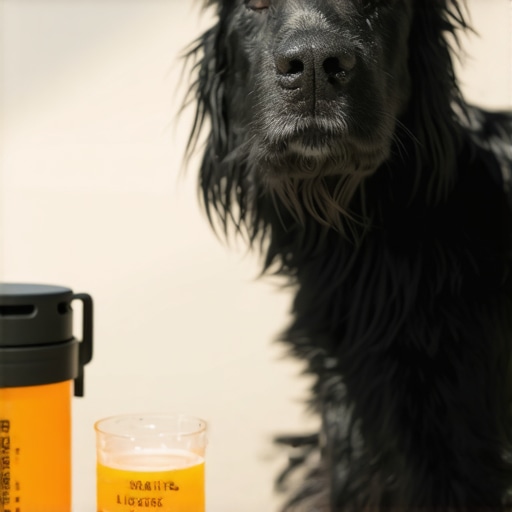
The broken thermostat in a desert summer
The shop smells like WD-40 and the kind of heavy, stagnant air that only a rattling industrial fan can produce. Outside, the Mesa asphalt is cooking at a temperature that would melt a cheap pair of boots. When the mercury hits 110, things stop working. Machines seize. Gaskets shrink. For a Diabetic Alert Dog (DAD), that heat is a mechanical failure waiting to happen. Most folks think a dog’s nose is magic, but I look at it like a high-performance intake system. If the air coming in is too hot, the sensors fail. Scent molecules are fragile things. They are volatile organic compounds that literally disintegrate when the sun starts beating down on the East Valley like a hammer on an anvil.
The High-Heat Blueprint: Scent preservation in extreme temperatures requires a shift from passive observation to active climate management. If the dog’s nasal mucosa dries out, the alert system is offline. Period.
Why the nose stalls at triple digits
You wouldn’t run a Cummins engine without coolant in the middle of a July afternoon. A dog’s olfactory system is water-cooled and water-dependent. Scent particles need to dissolve into a layer of mucus to reach the receptor cells. In 110-degree heat, that mucus layer evaporates faster than a spill on a hot manifold. We call this vapor lock for dogs. When the moisture is gone, the signal stops. I have seen handlers get frustrated because their dog missed a Low, but they didn’t realize the dog’s ‘hardware’ was physically incapable of catching the scent. The molecules are also moving faster in the heat, bouncing around and dispersing before they can be channeled into the snout. It is basic physics. High energy means high chaos.
Observations from the field reveal that scent plumes in Phoenix do not behave like scent plumes in Seattle. In the desert, the heat creates vertical thermals. The scent of a crashing blood sugar level doesn’t just hang around the person; it gets sucked upward by the rising heat coming off the ground. It is like trying to catch smoke in a wind tunnel. You have to keep the dog’s ‘intake’ primed. This means more than just a bowl of water. It means managing the micro-climate around the dog’s face. [External Link: https://www.sciencedirect.com/topics/agricultural-and-biological-sciences/olfactory-system]
Survival on the Mesa blacktop
If you are walking near the 202 or sitting outside a cafe in Gilbert, you are in a danger zone. The ground temperature is often 40 degrees hotter than the air. Your dog is walking four inches off a surface that is hitting 150 degrees. That is a radiator. It bakes the dog from the bottom up. Local legislation in some Arizona districts is finally catching up to the reality of animal cruelty in heat, but as a handler, you have to be your own inspector. You need to keep the dog in the ‘blue zones’—shaded areas with airflow. In Mesa, we use the light rail stations or heavy stone buildings for thermal mass cooling. If the dog’s core temperature spikes, their brain prioritizes cooling through panting. Panting is the enemy of scenting. When a dog is huffing air to dump heat, they aren’t sniffing. They are bypass-cooling. The air is moving through the mouth, not the nasal bypass. Your alert system is effectively bypassed.
Where the standard advice fails the test
Most trainers tell you to just ‘carry water.’ That is like saying you can fix a blown head gasket with a garden hose. It is too little, too late. The real friction happens when the humidity is low—which is always here. You need to use saline mists to keep the nasal passages from cracking. Think of it as lubrication for the sensors. Another messy reality is the ‘scent smear.’ In high heat, sweat and skin oils break down differently. The dog has to filter through a much noisier chemical environment. If you are using cooling vests, make sure they aren’t the cheap ones that just trap humidity against the skin. You want evaporative tech that actually moves the heat away. I have seen people use ‘swamp cooler’ style vests that just turn the dog into a steamed vegetable. That kills the working drive. You need gear that handles the 110-degree reality of the Sonoran Desert. [Internal Link: Service Dog Gear Reviews]
The 2026 reality for working teams
The old guard used to say a dog can work in any conditions. They were wrong. We have better data now. We know that at certain thermal thresholds, the accuracy of a DAD drops by as much as 40 percent. This isn’t a training issue; it is a hardware limitation.
Does the heat make my dog forget his training?
No, the heat makes the scent physically disappear before the dog can process it. It is a delivery failure, not a memory failure.
Can I use boots to help with scenting?
Indirectly, yes. If the dog’s paws are burning, their stress hormones spike. Stress increases heart rate and panting, which shuts down the olfactory intake.
What is the best time for outdoor work in Mesa?
If it is over 100, there is no good time. But if you must, the pre-dawn hours are the only time the ‘scent pool’ stays stable near the ground.
How do I know if the nose is too dry?
If the leather of the nose feels like fine-grit sandpaper instead of a damp sponge, you are already in the red.
Should I use scent containers in the heat?
Only if they are insulated. A metal tin in 110 degrees will cook the sample, changing the chemical signature entirely. [Internal Link: Diabetic Alert Dog Training Tips]
Keep the intake clean and the temp low
At the end of the day, you are the mechanic of this team. If you ignore the warning lights—the heavy panting, the dry nose, the distracted searching—you are going to have a breakdown. The desert doesn’t forgive mistakes. Keep your dog’s cooling system maintained, watch the pavement temps like a hawk, and remember that 110 degrees is a different world. Take care of the hardware, and the software will keep you alive. If you need a pro to look at your team’s performance under pressure, find someone who knows the desert, not just the classroom.