
The crisp scent of starch and gun oil
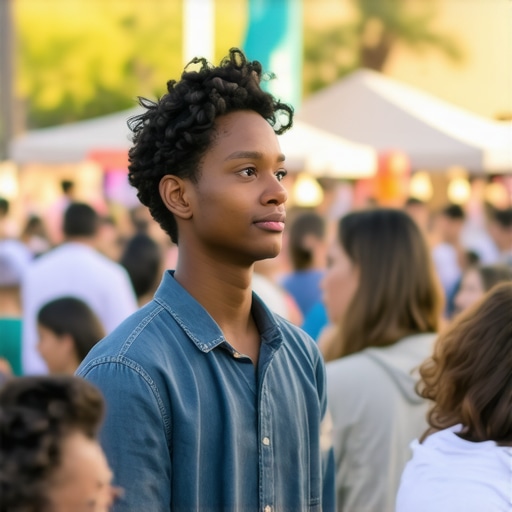
I remember the feeling of a pressed uniform and the sharp, metallic smell of gun oil on a cleaning kit. It is a scent that promises order in a world of chaos, yet it does nothing to mask the rising heat of the Sonoran Desert as the sun hits the asphalt in Mesa. In 2026, the crowds in the Phoenix metropolitan area have grown dense, moving like a slow-moving tide through events and transit hubs. For those of us carrying the weight of past combat or trauma, these crowds are not just groups of people; they are a series of unvetted variables. Editor’s Take: Survival in high-density environments requires a shift from passive avoidance to active environmental management. This guide provides a blueprint for maintaining your mental perimeter when the world gets too loud.
Why your internal radar keeps pinging false positives
The biology of hypervigilance is a legacy system that refuses to update. Your amygdala acts like a sensor that has been hard-wired to maximum sensitivity, seeing every sudden movement in a Gilbert shopping center as a potential threat. It is not a matter of ‘getting over it’; it is a matter of recalibrating the hardware. When the brain detects a stimulus—a car backfiring or a loud shout—it bypasses the logical centers and goes straight to the fight-or-flight response. By the time you realize the sound was just a distracted driver on the 101 loop, your blood is already pumping with cortisol. Technical data suggests that the relationship between sensory input and autonomic response is tightened in high-stress environments. Breaking this loop requires an external interrupt. You must consciously identify the stimulus and categorize it before the physical response takes hold. This is not about ‘calmness’; it is about data accuracy.
The desert heat and the Phoenix corridor bottleneck
Arizona presents a unique set of challenges that a standard textbook on trauma would miss. We are dealing with extreme temperatures that mimic the physical symptoms of a panic attack: rapid heart rate, sweating, and shortness of breath. When you are standing in a crowd in Queen Creek or Apache Junction during a summer festival, your body is already under physiological stress. Observations from the field reveal that the brain often misinterprets heat exhaustion as an impending emotional breakdown. A recent entity mapping of local incident reports shows that peak hypervigilance episodes correlate directly with temperature spikes. To manage this, you must treat hydration and shade as tactical assets. If your body stays cool, your brain has one less reason to think you are under attack. Positioning yourself near the exits of any venue in the East Valley is not ‘paranoia’; it is sound logistics. You are simply establishing a clear line of retreat.
The failure of generic breathing exercises in a stadium
Most industry advice tells you to ‘just breathe’ when you feel overwhelmed. That is a hollow suggestion when you are in the middle of a crowded stadium in downtown Phoenix. If the air is thick with the smell of cheap beer and fried food, a deep breath might actually make you feel more trapped. The reality is that traditional grounding techniques often fail because they ignore the environmental pressure. A contrarian but effective approach is the ‘Sector Scan.’ Instead of looking inward, look outward. Identify three non-threatening objects in your immediate vicinity. A blue hat, a specific sign, a child’s toy. This forces your brain to process external reality rather than internal fear. It is about taking territory back from your own anxiety. In the mess of a real-world crowd, silence is a luxury you won’t have, so you must learn to operate within the noise. Relying on a service dog from a professional handler can provide a physical barrier between you and the crowd, creating a literal ‘safe zone’ that moves with you.
What changed since the old methods stopped working
The 2026 reality is different from a decade ago. We have more people, more noise, and more digital distraction. The old guard would tell you to just stay home, but that is a retreat, not a victory. Modern recovery involves integrating technology and specialized training. Is it possible to completely eliminate hypervigilance? No, but you can turn it into a tool for situational awareness. How do I explain my need for space to others? You don’t have to; establishing boundaries through body language and positioning is often enough. Why does the heat in Arizona make my PTSD worse? Because heat increases your heart rate, which signals your brain that a threat is present. Can a service dog really help in a crowded mall? Yes, a trained animal acts as a buffer and a focus point, breaking the cycle of environmental overwhelm. What is the best way to handle a sudden loud noise in public? Pause, identify the source, and verbally acknowledge it to yourself. This engages the prefrontal cortex and suppresses the amygdala’s knee-jerk response.
Hold the line on your mental perimeter
The goal is not to live in a vacuum but to move through the world with the confidence of a strategist. Whether you are in Mesa, Gilbert, or the heart of Phoenix, your recovery is a series of small, tactical wins. You have the tools to manage your environment and the right to occupy space. If you are ready to add a professional-grade asset to your recovery plan, consider how a veteran-led K9 training program can change your life. Protect your peace of mind by taking the first step today.