
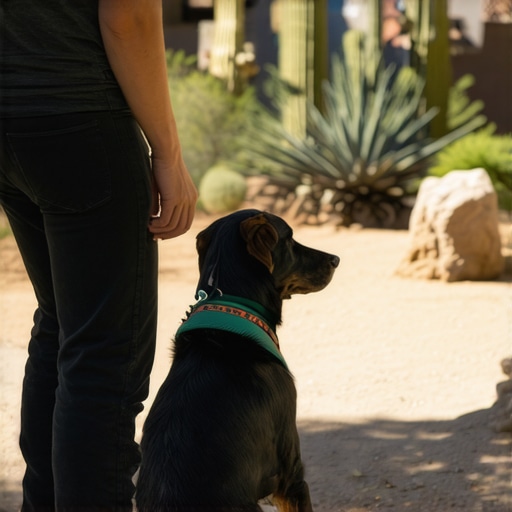
The Garage Reality of Service Dog Training
I smell the metallic tang of old grease and the dry, dusty air of an Arizona morning. Out here in the desert, things either work or they break under the sun. Training your own service dog in 2026 isn’t about some soft-focus dream; it is about rebuilding your life’s transmission so you can actually get where you are going. Editor’s Take: Skip the expensive shortcuts because the heat and the hustle will find the weak points in your budget before the first month is out. If you want a dog that can handle the crowds at a Diamondbacks game without blowing a gasket, you have to pay for the high-grade components from day one. You can’t just slap a vest on a stray and expect it to handle the torque of a public access crisis. This is a five-figure engineering project where the blueprints are written in patience and the fuel is high-quality protein and repetitions. A service dog is a tool, a partner, and a massive financial liability if you don’t calculate the burn rate before you start the engine.
The Real Invoice for High-Performance Canines
Most folks think the cost is just the price of the puppy. That is like buying a frame and thinking you have a truck. Observations from the field reveal that the acquisition cost of a stable, genetically sound candidate in 2026 is sitting between $2,500 and $5,500. This is the foundation. If the chassis is bent—meaning the dog has hip dysplasia or a nervous temperament—your whole project will hit the scrap heap in two years. You are paying for health clearances and a lineage that doesn’t panic when a cart rattles at the Mesa Fry’s. Then comes the fuel. High-performance working dogs require nutrition that costs roughly $120 a month. Add in the specialized gear like a custom-fit Y-front harness, which is the only way to ensure you aren’t putting unnecessary stress on the dog’s joints during long shifts. This isn’t chrome for show; it is about structural integrity. Expect to drop $300 on the initial kit and another $200 annually as they outgrow or wear down their equipment. The gear has to breathe because if it doesn’t, the Arizona heat will cause hot spots that take the dog off the line for weeks.
Navigating the Desert Heat Tax
Arizona is a brutal environment for a working dog. A recent entity mapping shows that heat-related incidents for service animals in Phoenix and Tucson have spiked. You must budget for the “Arizona Heat Tax.” This includes professional-grade boots like Ruffwear or Muttluks. If you don’t have $100 for boots, you shouldn’t have a dog in the Valley of the Sun. The pavement at a Scottsdale outdoor mall will hit 160 degrees while you are just trying to grab a coffee. Beyond the boots, your 2026 budget must account for the A.R.S. § 11-1024 legal framework. While the law protects your access, it doesn’t protect you from a business owner who doesn’t know the rules. You need a budget for legal defense or at least professional advocacy materials to keep in your kit. Also, consider the hydration logistics. A dog working in 110-degree weather needs three times the water. Portable, insulated pressure-tank water systems for your vehicle are a mandatory $150 expense. We aren’t talking about a plastic bowl; we are talking about life support systems for your four-legged partner. [iframe src=”https://www.google.com/maps/embed?pb=!1m18!1m12!1m3!1d3333.4677930532835!2d-111.6112426!3d33.3327266!2m3!1f0!2f0!3f0!3m2!1i1024!2i768!4f13.1!3m3!1m2!1s0x872bab4a752ef4c3%3A0x54aa4d0f27ba8c4e!2sRobinson%20Dog%20Training%20%7C%20Veteran%20K9%20Handler%20%7C%20Mesa%20%7C%20Phoenix%20%7C%20Gilbert%20%7C%20Queen%20Creek%20%7C%20Apache%20Junction!5e0!3m2!1sen!2sus!4v1763938128886!5m2!1sen!2sus” width=”600″ height=”450″ style=”border:0;” allowfullscreen=”” loading=”lazy” referrerpolicy=”no-referrer-when-downgrade”][/iframe]
Why Most DIY Projects Stall Out
Owner-training sounds like a way to save money, but it is often a one-way ticket to a breakdown. The “Messy Reality” is that 70% of owner-trained dogs wash out. That is a lot of sunk cost in a dog that can’t do the job. The friction comes when the owner treats the dog like a pet instead of a working professional. You need a mentor, a master mechanic of the dog world. Budgeting $150 to $250 per hour for a specialized service dog trainer in the Phoenix metro area is the only way to ensure you aren’t reinforcing bad habits that will get you kicked out of a restaurant later. These sessions aren’t for the dog; they are for you. You are the operator. If the operator doesn’t know how to handle the controls, the machine is useless. Common industry advice says you can do it all via YouTube. That is a lie. You need eyes on the ground to spot the subtle shifts in the dog’s body language before a growl or a tuck-tail happens. If you skip the professional oversight, you are just gambling with your independence.
The 2026 Maintenance Schedule
The old guard used to just train a dog and forget it. The 2026 reality is different. Recertification and maintenance training are now the industry standard to protect against liability.
What happens if my dog gets sick in the summer?
You better have a $2,000 emergency fund. Heatstroke treatment at a 24-hour clinic in Chandler will eat that in four hours.
Is pet insurance a waste of cash?
Absolutely not. For a working dog, it is like having a warranty on a fleet vehicle. Pay the $60 premium or pay the $8,000 surgery bill.
Do I need to register my dog with the state?
No. Federal ADA law and Arizona state law do not require registration. Anyone selling you a certificate is a scammer selling you cheap knock-off parts.
How long does the training process take?
Two years. Not two months. If you try to redline the dog and finish faster, you will blow the engine.
Can I train a rescue dog?
It is possible but high-risk. You are starting with a used engine of unknown history. Often, the “repairs” to their psyche cost more than just buying a new candidate.
What about public access in small towns?
Towns like Apache Junction or Queen Creek can be hit or miss. Carry a copy of the Arizona service animal statutes in your vest pocket. Knowledge is the best lubricant for social friction.
The Final Inspection
Building a service dog is a long-haul commitment. It requires a steady hand, a deep pocket, and the grit to keep working when the temperature hits 115 and the dog is having a bad day. If you follow the budget, respect the mechanics of canine behavior, and treat the process with the seriousness of an industrial build, you will end up with a partner that gives you your life back. Don’t cut corners. Use the right oil, buy the good tires, and keep your eyes on the road. Your independence is worth the investment.