
The metal on metal sound of a sensory meltdown
I spent my morning under a ’94 Chevy, but the logic of a service dog isn’t much different than a transmission. If the gears don’t mesh, the whole machine grinds to a halt. In 2026, we aren’t just teaching dogs to sit; we are calibrating them as biological dampeners for a world that has become too loud, too bright, and too unpredictable. My shop smells like WD-40 and cold concrete, a sharp contrast to the soft focus required for this work. Editor’s Take: Modern autism service dogs require tactile grounding, scent-based cortisol alerts, and spatial blocking to prevent neuro-sensory overload in high-friction environments like the Phoenix Metro area. These three tasks aren’t luxuries. They are the essential safety valves that keep a handler from redlining into a full-scale meltdown during a grocery run in Gilbert or a noisy commute through Apache Junction.
The three-point check for human stability
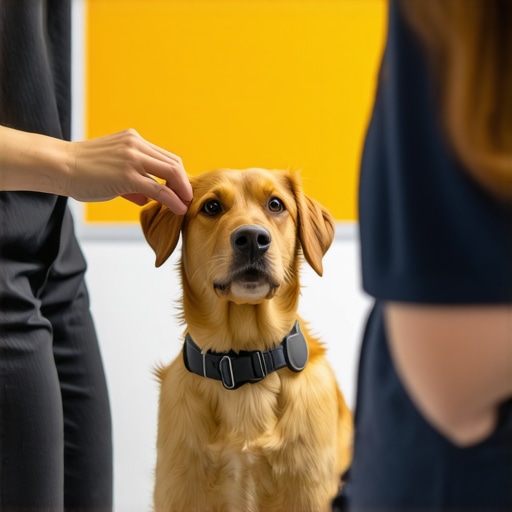
Technicians know that a small vibration in the driveshaft leads to a total failure at sixty miles per hour. Deep Pressure Therapy acts as the counterweight. [IMAGE_PLACEHOLDER] When a dog applies its physical weight to specific pressure points on the handler, it triggers a parasympathetic response. It is pure physics. In the 2026 training standard, this isn’t a ‘trick.’ It is a calculated intervention. Then we look at cortisol detection. Most people think dogs smell fear. No, they smell chemistry. A dog trained to detect the early spikes of stress hormones can alert a handler before the handler even realizes their ‘engine’ is overheating. Finally, spatial blocking provides a physical perimeter. In crowded spaces, the dog positions its body to create a buffer zone. It’s like installing a roll cage around the handler’s personal space. This link to physical security is what allows for true independence in the wild streets of Arizona.
Why Phoenix heat warps the training curve
Working a dog in Mesa or Queen Creek adds a layer of complexity that those folks in cooler climates don’t get. When the asphalt hits 150 degrees, the dog’s own sensory load increases. If the dog is struggling with the heat, its ability to perform high-level sensory tasks drops. You can’t expect a machine to run smooth if the coolant is boiling. We focus on ‘High-Ambient Reliability.’ This means the dog must maintain focus on the handler’s internal state while navigating the external thermal stress of the Arizona desert. Local handlers need to account for this sensory competition. If the dog is distracted by the burning sun, it misses the subtle scent of a cortisol spike. We have to tune the dog’s ‘sensors’ to filter out the noise of the environment to focus on the signal of the handler. Observations from the field reveal that summer training requires a complete shift in timing to preserve the dog’s diagnostic accuracy.
The friction of standard obedience versus reality
Most ‘expert’ advice tells you that a dog just needs to be well-behaved. That’s like saying a car just needs a shiny coat of paint to win a race. In the messy reality of a neurodivergent life, obedience is secondary to intuition. A dog that waits for a command is useless if the handler is too far into a shutdown to speak. We train for ‘Intelligent Disobedience.’ If the handler tries to walk into a busy intersection in a daze, the dog must plant its paws and refuse. This is the difference between a tool and a partner. I’ve seen dogs in the East Valley handle the chaos of a busy shopping mall with more poise than the people around them. The failure point usually isn’t the dog’s skill. It’s the ‘maintenance’ of the bond. If the handler stops reading the dog’s subtle signals, the system breaks down. It’s a two-way street that requires constant alignment.
How the 2026 reality shifts the gear
The old guard thought service dogs were for physical disabilities only. The 2026 reality acknowledges the invisible neurological architecture. We are seeing more integration with biometric wearables that can ‘ping’ a dog’s collar when a handler’s heart rate climbs. But the dog is still the primary engine.
What if my dog misses an alert?
Systems have redundancies. We train handlers to recognize the dog’s ‘pre-alert’ behaviors, like a slight whine or a nudge.
Is cortisol training effective in high-wind areas like Apache Junction?
Yes, scent-work relies on proximity. The dog is close enough to the handler’s skin and breath to catch the chemical shift regardless of the breeze.
Can any breed perform these sensory tasks?
While any dog has a nose, not every dog has the ‘torque’ to handle the emotional weight. Temperament is the chassis everything else is built on.
Does the Phoenix heat affect cortisol scent?
Extreme heat can degrade scent molecules faster, so we train for higher sensitivity.
How long does the sensory tuning take?
It’s a lifetime of maintenance, but the core ‘overhaul’ takes about 18 to 24 months of consistent work.
The final inspection
You wouldn’t drive a car with bad brakes through the Superstition Mountains. Why would you try to navigate a neuro-complex world without a properly tuned service dog? The sensory tasks of grounding, alerting, and blocking are the difference between being stranded and being mobile. If you are looking for a partner that understands the mechanics of your nervous system, it’s time to look at the training that goes beyond basic commands and into the actual biology of synchronization. Let’s get the machine running right.
This article really highlights how advanced training for service dogs has become, especially in addressing the sensory overload that many autistic individuals face. The integration of tactile grounding, cortisol detection, and spatial blocking is fascinating because it shows how much science and technology can work together to support independence. I appreciate the emphasis on understanding the dog as a partner rather than just a tool—this connection is crucial for effective assistance. In my experience volunteering with a local autism support organization, I’ve noticed that dogs trained with these nuanced tasks tend to better adapt to the unpredictable environments that people with sensory processing differences encounter daily. I’m curious, how do handlers in hotter climates like Phoenix adapt their training routines during peak summer months to ensure the dogs maintain this high level of sensory focus? It seems like the environmental adjustments are just as important as the training itself.
Reading this post really highlights the incredible complexity behind training service dogs for sensory tasks, especially in challenging environments like Arizona. The focus on tactile grounding, cortisol alerts, and spatial blocking demonstrates a thoughtful approach that goes beyond traditional obedience training. I’ve worked with dogs in more temperate climates, but I wonder how the intense heat and prolonged sunlight in Phoenix and surrounding areas influence a dog’s sensory acuity over time. Do handlers need to implement specific cooling or reinforcement protocols during summer months to prevent sensory overload or fatigue? Also, I find the concept of ‘High-Ambient Reliability’ fascinating—they seem to be tuning the dog’s senses to prioritize the handler’s internal cues amid external noise. It seems as much about the handler’s awareness and bond with the dog as it is about the dog’s training. Would love to hear how others manage seasonal environmental factors without compromising the dog’s focus or safety. It’s inspiring to see how nuanced this work has become to truly support independence.
This post really underscores the sophisticated level of training required for service dogs working in challenging environments like Arizona. The focus on tactile grounding, cortisol detection, and spatial blocking is not just about obedience but about creating a true partnership that can handle sensory overloads on a daily basis. I’ve seen firsthand how crucial it is for handlers to maintain a strong bond and adaptive training, especially in the extreme heat which can definitely impact a dog’s sensory performance. From my experience volunteering at a rescue in Tucson, incorporating cooling protocols such as shaded training areas and water-based exercises during the hottest parts of the day has made a significant difference. Also, connecting with other handlers about how they maintain high sensory focus amidst environmental stressors can provide excellent strategies. I’m curious, are there specific training adjustments or tools that you’ve found particularly effective to help dogs maintain peak performance during Arizona’s scorching summers? It’s inspiring to see how the training standards evolve to meet these environmental challenges and support independence seamlessly.