
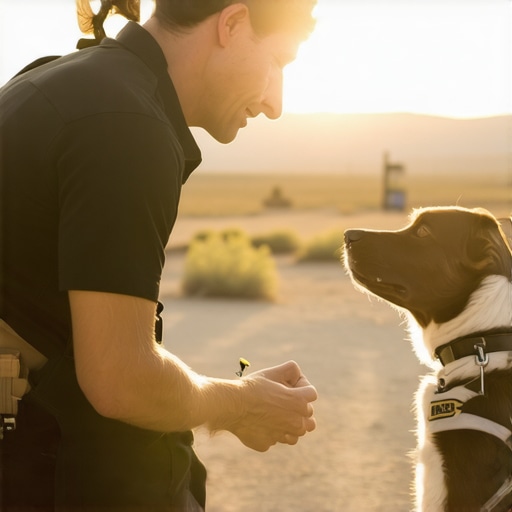
The grease under the fingernails of the service dog industry
Smells like WD-40 and the cold, unforgiving concrete of a Mesa garage at 5 AM. You’re looking at a $20,000 price tag for a pre-trained golden retriever and thinking there has to be a better way to fix the problem. There is. In Arizona, owner-training your service animal isn’t just a legal right; it’s a structural necessity for those who can’t wait three years on a list. The Editor’s Take: Stop buying the ‘luxury trim’ package from predatory agencies. You can build a reliable, task-trained partner for under $5,000 if you’re willing to get your hands dirty with the logistics of the ADA.
The mechanical reality of a task-trained dog
A service dog isn’t a pet; it is a piece of medical equipment with a heartbeat. Most people get blinded by the ‘cute factor’ and forget about the torque required for public access. Under the Americans with Disabilities Act (ADA), a service animal must be individually trained to do work or perform tasks for the benefit of an individual with a disability. We aren’t talking about ’emotional support’ fluff. We are talking about bracing for mobility, medical alerts for glucose spikes, or deep pressure therapy for PTSD. If the dog doesn’t perform a specific function that mitigates your disability, it’s just an expensive passenger. According to the Department of Justice, you aren’t required to use a professional trainer. You are the lead engineer here. You select the ‘chassis’—ideally a breed with high biddability like a Lab or a GSD—and you start the long process of ‘socialization’ and ‘proofing’ in high-distraction environments like the Mesa Riverview shopping center.
Arizona heat and the physics of public access
Training a dog in the Phoenix metro area requires a different set of tools than training in Maine. You have to account for the ‘heat soak.’ If the asphalt at a Gilbert parking lot is 160 degrees, your dog’s paws are going to melt. That is a mechanical failure you can’t afford. Local handlers know that ‘booting up’ is a non-negotiable part of the kit. Furthermore, Arizona Revised Statutes § 11-1024 provides specific protections that mirror federal law but add a local layer of ‘teeth’ for those who try to deny access. I’ve seen guys get turned away from shops in Queen Creek because they didn’t have a ‘vest.’ Pro tip: the vest is optional, but a well-fitted harness suggests the dog is ‘on the clock’ and reduces friction with uneducated business owners. You want the dog to behave like a silent shadow in the grocery store, not a lunging mess.
Why the ‘Positive Only’ crowd might steer you wrong
Listen, I like treats as much as the next guy, but if your 80-pound Lab decides to chase a lizard across a six-lane road in Scottsdale, a piece of chicken isn’t going to stop the momentum. You need reliable brakes. The ‘messy reality’ of owner-training is that you must have 100% recall and focus. This often involves a ‘balanced’ approach—using clear communication that includes both rewards for the right ‘gear’ and corrections for the wrong one. Many owner-trainers wash out because they refuse to apply the necessary pressure to proof a dog against a screaming toddler or a dropped tray of food in a crowded Apache Junction diner. If your dog can’t handle a ‘glitch’ in the environment without breaking its stay, it isn’t ready for a service vest. You’re building a failsafe system, not a hobby project.
The 2026 upgrade to the owner-trainer model
The old guard wants you to believe that you need a $10,000 certification from a non-profit. That’s a myth designed to keep the gate closed. By 2026, the ‘blueprint’ is about data and documentation. Keep a ‘maintenance log’ of every training hour. Film your public access tests at the Superstition Springs Mall. This creates a ‘paper trail’ that proves your dog’s status if you ever end up in a legal scrape.
How long does the training take?
Expect to put in 12 to 24 months of consistent work. It’s like rebuilding a transmission; you can’t rush the assembly.
Do I need to register my dog online?
No. Those ‘official’ registries are scams. They have zero legal standing under the ADA. Save your money for high-quality kibble and vet checks.
What if my dog barks once in a store?
One bark isn’t a disaster, but a lack of control is. If the dog is out of control and the handler doesn’t take effective action, the shop can ask you to leave.
Can I train any breed?
Legally, yes. Practically, no. You don’t take a moped to a drag race. Stick to breeds with the right temperament and ‘drive’ for the job.
Does my dog need to wear a vest in Arizona?
No, but it acts as a ‘keep back’ sign for the public. It helps maintain the ‘buffer zone’ you need to operate safely.
The road ahead for Arizona handlers
You don’t need a massive bank account to gain independence. You need a wrench, a blueprint, and the willingness to put in the work when the sun is beating down on the East Valley. The $10,000 you save can go toward your actual health needs or a better vehicle to transport your new partner. Stop waiting for a handout and start building the solution yourself. Your independence is worth the sweat.
This article hits on a lot of critical points I’ve experienced firsthand in owner-training my service dog. The emphasis on the importance of consistent, long-term training resonates with me because I’ve seen how rushing the process or relying solely on treats can lead to issues once the dog faces real-world distractions. The mention of documenting progress and building a ‘paper trail’ for legal clarity is something I find incredibly useful—having a detailed log of training sessions and public access tests has come in handy more than once. I also appreciate the practical advice on gear and behavior cues in Arizona’s climate, like the boots and harness use. It makes me wonder, what are some common mistakes new owner-trainers overlook during their training journey, especially for those working in hot climates? I’d be keen to hear tips on avoiding these pitfalls and sharing resources for more effective proofing techniques.